AI Framework Claims Emotion Decoding From EEG Without Labels
Bioengineer.org reports an AI framework that decodes emotional states from brainwaves without labeled training data. The claim is notable; the evidence, so far, is a headline without numbers.
Updated
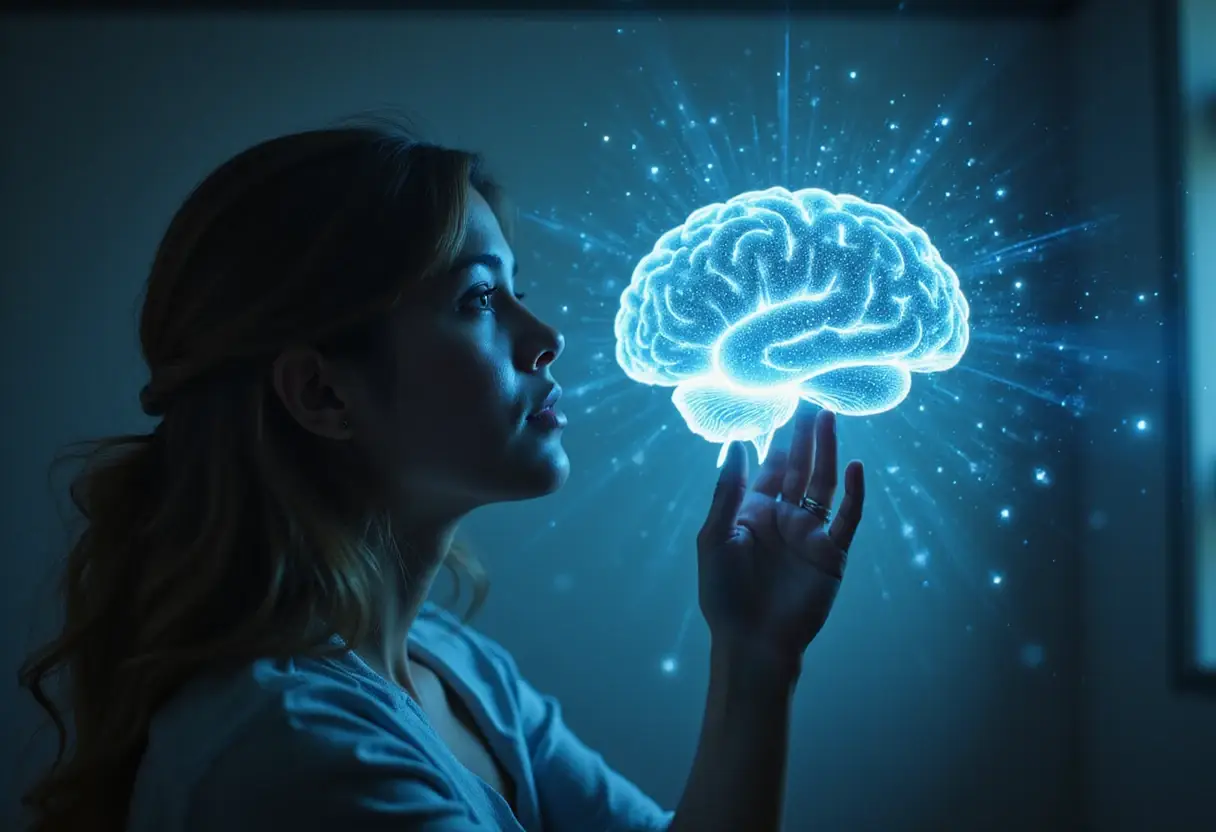
A new artificial-intelligence framework can classify emotional states from brainwave recordings without requiring labeled training data, according to a report published by Bioengineer.org. The headline claim is the whole story at this stage: an unsupervised or self-supervised model, applied to neural signals, producing affect-related outputs that previously demanded large annotated datasets.
That claim deserves careful handling. Emotion decoding from EEG is one of the most contested corners of affective computing, and the difference between a demonstration on curated datasets and a method that survives a clinical monitoring unit is considerable. The report, as it stands, supplies a headline and no accompanying technical detail — no cohort size, no montage specification, no accuracy figure, no named institution. What follows is what the claim means for readers of this site, and what to watch for when the underlying paper surfaces.
Why does the absence of labels matter?
Labeled emotion data is scarce because it is expensive and unreliable. A technician can mark a seizure onset on scalp EEG with reasonable agreement across readers. Nobody can mark "anxiety" or "amusement" on a trace with the same confidence. Every label in a typical emotion-EEG dataset inherits the noise of self-report, induced stimuli, and inter-rater disagreement.
A framework that skips labels sidesteps that bottleneck in principle. It learns structure directly from the recordings — clustering, contrastive objectives, or signal reconstruction, depending on the architecture — and maps that structure onto affective dimensions afterward. If the work holds up, the practical consequence is straightforward: smaller teams without annotation budgets could build affect-classification models from their own archive of routine recordings.
The caution is equally straightforward. Unsupervised methods can find structure that corresponds to electrode artifacts, impedance drift, or eyeblink contamination rather than anything affective. In scalp EEG especially, the signal most available to an unsupervised learner is often not the signal anyone wanted.
What does this change for the reading room and the lab?
Today, nothing. This is research-stage work, not an FDA-cleared device, and no regulatory pathway is asserted in the report. Clinical neurophysiology operates on modalities with validated montages, normative databases, and established diagnostic yield. Affective decoding has none of that apparatus, and no reader should expect an emotion readout alongside the routine EEG report.
For research labs, the change is prospective. Teams running neurofeedback protocols, affective BCI experiments, or passive monitoring studies — where the recording method is typically scalp EEG, occasionally ECoG or MEG in presurgical populations — spend a large share of their effort on annotation. A label-free framework, if reproducible, would redirect that effort toward validation instead.
The questions the full paper must answer
The reporting at this stage leaves every decisive question open. Readers should look for the following when the study itself appears:
- The recording modality and montage — scalp EEG with a standard 10–20 arrangement, or something else entirely.
- The cohort: how many participants, healthy volunteers or patients, and whether the data are newly collected or benchmark datasets such as DEAP or SEED, which the field knows how to overfit.
- The definition of "correct" when there are no labels — which external criterion the model's clusters were checked against.
- Cross-subject performance, the graveyard of most emotion-decoding claims.
- Whether the investigators released code and data.
The verdict
The claim is interesting. The evidence, so far, is a headline. Until the method, the modality, and the numbers appear in a peer-reviewed venue with cross-subject results, this belongs in the "tracked, not trusted" file. When the paper lands, this page will report what the framework actually demonstrated — and, more importantly, on which signals.
Based on
Source: Google News: EEG.
Elena Vasquez
Show full bio
News editor covering people, launches and day-to-day practice in Clinical neurophysiology and EEG interpretation at EEG Signal.