Brain–Computer Interface Detects Hidden Awareness in Unresponsive Patients
A brain–computer interface has registered command-following in unresponsive patients, exposing covert awareness the bedside neurological exam cannot detect.
Updated
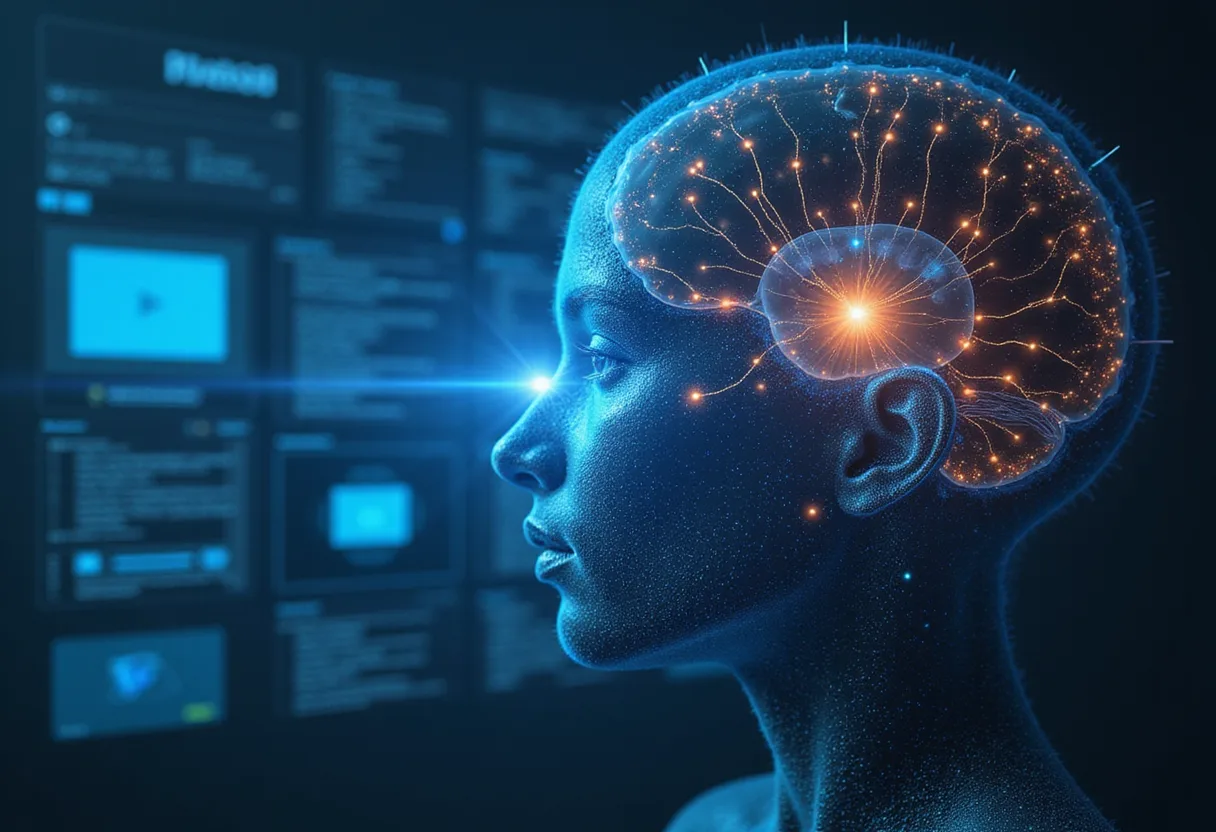
A brain–computer interface has detected hidden awareness in patients who show no responsiveness at the bedside, according to a report carried by Medical Xpress. The finding addresses one of the hardest problems in clinical neurophysiology: distinguishing patients who retain covert cognitive function from those who do not, in a population where standard behavioral examination returns no signal at all.
The report centers on unresponsive patients — individuals who, on repeated clinical assessment, fail to follow commands or demonstrate any volitional behavioral output. In a subset of these patients, the brain–computer interface succeeded where the bedside exam did not: it registered command-following in neural activity alone. This is the phenomenon clinicians know as cognitive motor dissociation, and it carries direct prognostic and ethical weight in the neurointensive care unit.
Brain–computer interfaces of the class described here do not infer thoughts. They detect volitional modulation of brain signals — classically, an instructed mental task such as imagining hand movement or spatial navigation, performed on command and decoded from electrophysiological recordings. When a patient who cannot move a finger reliably modulates their neural rhythm in response to an instruction, that modulation is evidence of language comprehension, sustained attention, and intentional behavior. The interface reads a yes/no-style compliance signal, nothing more.
For the reading room and the monitoring unit, the practical implication is immediate. A scalp EEG paradigm of this type requires no surgery, no implanted hardware, and no exotic equipment beyond amplifiers and stimulation software that many epilepsy monitoring units already possess. Protocols of this kind typically run as repeated command blocks interleaved with rest, with decoders trained to separate task epochs from baseline. The report does not specify the exact montage, cohort size, or decoder architecture, so readers should treat the device-level details as pending the underlying publication rather than settled.
What the report does establish is the headline result: covert awareness was detected in unresponsive patients using a BCI. That places this work in the lineage of command-following paradigms built on scalp EEG and related non-invasive recordings, which anesthesiology and neurocritical care groups have used for roughly two decades to expose dissociation between behavior and cognition. Each successful detection of this kind forces a revision of bedside estimates of consciousness and, with them, conversations about prognosis and care planning.
The distinction between investigational and clinical status matters here. No FDA-cleared device currently exists for diagnosing covert awareness by BCI in disorders of consciousness; systems of this kind remain research tools, and the report describes study findings, not a deployed clinical product. Clinicians should not read this as a new standard of care. They should read it as accumulating evidence that a scalable, non-invasive electrophysiology workflow can surface information the neurological exam cannot.
The claims, as reported, stay within what a BCI study of this design can demonstrate: command-following detected in neural signals, in specified unresponsive patients, with the recording method named as a brain–computer interface built on brain-signal decoding. It is not mind reading, it is not communication beyond what the paradigm explicitly trains, and it does not by itself establish the richness of a patient's inner mental life. What it establishes is narrower and, for that reason, more clinically usable — a reproducible marker of intentional brain response.
The forward path is familiar to anyone who has followed this field: larger cohorts, standardized instruction sets, decoder validation against expert EEG reading, and integration with the multimodal workup — structural imaging, long-latency evoked potentials, and quantitative EEG trends — that monitoring units already use for prognostication. If the reported detection approach holds up in prospective, blinded testing, the monitoring unit of the near future could routinely pair the behavioral exam with an EEG-based command-following protocol before any conclusion about awareness is written into the chart.
Based on
Marcus Bennett
Show full bio
Staff writer covering technology and product news in Clinical neurophysiology and EEG interpretation at EEG Signal.