Deep Learning Meets EEG: A Headline Without a Body
A deep-learning-meets-brain-signals headline circulates without study details. Here is what practitioners can and cannot take from it — and the questions to ask next.
Updated
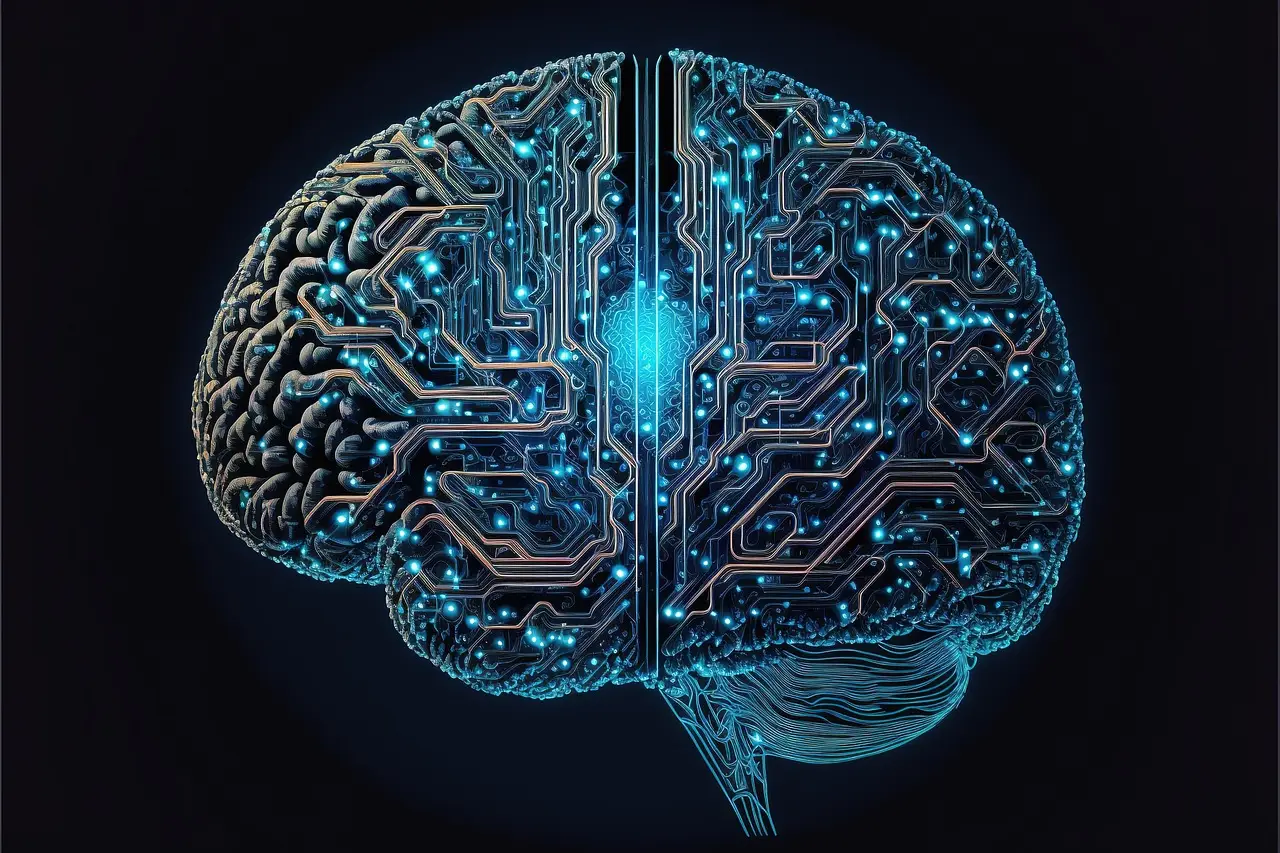
The source behind this item contains exactly one substantive element: a headline. It reads "Deep Learning Is Teaching Machines to Read the Brain's Electrical Whispers," attributed to Bioengineer.org and surfaced through Google News. Nothing else. No journal name, no cohort size, no modality specified, no performance metrics, no investigator quotes, no funding disclosure.
As a publication serving clinical neurophysiology practitioners, we will not reconstruct a study that the source does not describe. That discipline matters. Headlines about deep learning and brain signals routinely collapse distinct things: scalp EEG, intracranial stereo-EEG, electrocorticography (ECoG), magnetoencephalography (MEG), and electromyography all differ in sampling, noise floor, and clinical clearance status. A phrase like "the brain's electrical whispers" could refer to any of them. Without the paper, we cannot tell you which.
What the headline does and does not claim
The headline makes two claims we can verify as present in the source. First, that deep learning is involved. Second, that it is being applied to electrical brain signals in some interpretive way — "teaching machines to read." Both are broad. Neither is false as a description of the field in general, but neither is a finding.
What the headline does not contain:
- No device name, no FDA clearance status, no investigational designation
- No human or animal cohort, so we cannot distinguish human data from preclinical work
- No recording montage, electrode count, sampling rate, or duration
- No accuracy, sensitivity, specificity, or area-under-curve figure
- No named institution, laboratory, or author
- No publication date or journal reference
How practitioners should handle such items
For monitoring-unit and reading-room staff, the practical risk of a headline-only story is premature expectation. Deep learning classifiers applied to EEG have shown real gains in specific, bounded tasks — seizure onset detection, interictal spike tagging, sleep staging — when validated against expert annotation on held-out data. The operative word is validated. A headline that gestures at machines "reading" brain activity without naming the modality, the validation set, or the comparison standard gives you nothing transferable to practice.
Our standing guidance applies here with full force:
- Check whether the work is FDA-cleared or investigational before considering workflow implications
- Distinguish scalp EEG from intracranial recordings; performance figures do not transfer between them
- Treat animal-model results as preclinical until human replication appears
- Look for the validation cohort, not the training cohort, when judging a classifier's claims
- For any brain-computer interface or neurofeedback angle, the recording method defines the ceiling of what is demonstrable — name it before believing it
Why we are running this at all
Transparency about source quality is part of our editorial job. Bioengineer.org aggregates research coverage, and the underlying item may well describe a legitimate and interesting study — coverage of deep-learning signal decoding is a genuinely active area. When the original article or preprint becomes accessible, we will follow up with specifics: modality, cohort, metrics, and clearance status. Until then, the honest read of this item is that it signals a direction, not a result.
The direction itself is not trivial. Machine interpretation of bioelectrical signals sits at the intersection of neurology, engineering, and regulatory science, and the pace of publications has been substantial. But direction is not evidence. If a colleague forwards you this headline, the correct response is a single question: which signals, recorded how, validated against what?
We will update this item once the underlying study is identifiable.
Based on
Source: Google News: EEG.
Marcus Bennett
Show full bio
Staff writer covering technology and product news in Clinical neurophysiology and EEG interpretation at EEG Signal.