Neurofeedback & Neuromodulation
Neurofeedback Training Proposed to Shield Astronauts from Mission Stress
A neurofeedback brain training program is being proposed to protect astronauts from mission stress, though protocol details, cohort data and hardware remain unspecified in the report.
Updated
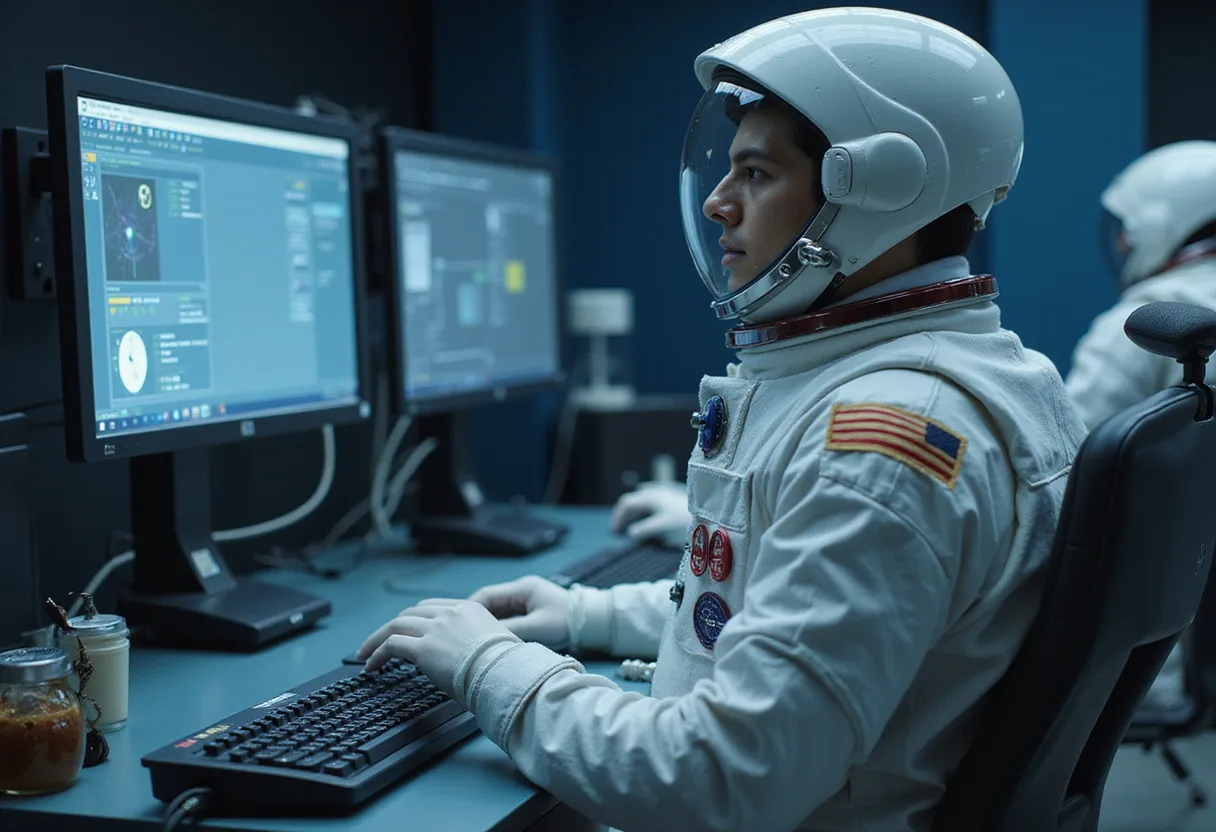
A neurofeedback-based brain training program is being promoted as a way to protect astronauts from stress during space missions, according to a report carried by Science in Poland.
The claim centers on neurofeedback — a technique in which a person views a real-time display of their own brain activity, typically recorded with scalp EEG, and learns to modulate specific rhythmic components such as alpha or theta power. On Earth, clinics use the method for attention deficits, migraine and anxiety, with variable evidence quality. Extending it to crewed spaceflight is a newer proposition, motivated by a well-documented problem: isolation, confinement, disrupted sleep and high workload impose sustained psychological strain on crews, and the farther the mission extends beyond low Earth orbit, the fewer the options for real-time psychological support from the ground.
The report does not specify the exact protocol — number of sessions, the frequency band targeted for training, or the hardware that would deliver feedback aboard a spacecraft. Nor does it state whether any data come from analog environments such as Antarctic stations or Mars simulation habitats, from actual crewed missions, or from ground-based healthy volunteers. Readers evaluating the claim for clinical or operational relevance should note that neurofeedback outcomes depend heavily on montage, reward-band selection, artifact control and session count — details that will determine whether the spaceflight application holds up.
For neurophysiology teams, the proposal raises familiar measurement questions. EEG acquisition inside a spacecraft must contend with electromagnetic interference from onboard systems, electrode contact under microgravity conditions, and limited technician availability — constraints that argue for dry-electrode or amplifiers-with-active-shielding setups and automated artifact rejection. Any training effect would need verification against a control condition, since neurofeedback studies are notoriously vulnerable to expectancy effects when participants and operators know who receives active training.
The regulatory status is straightforward: this is investigational work, not a cleared device application. No space agency has approved neurofeedback as a standard countermeasure for crew behavioral health. Current operational practice relies on pre-mission psychological screening, structured communication schedules, sleep hygiene protocols and, on the International Space Station, private psychological conferences with ground staff. A self-administered EEG-based tool would complement, not replace, those measures — provided trials demonstrate a durable effect on validated stress markers rather than on subjective reports alone.
The report also stops short of quantifying the stress-related outcomes involved: it gives no effect sizes, no baseline-to-post-training differences, and no cohort size. Whether the underlying work involved human participants at all, and at what mission-relevant fidelity, cannot be confirmed from the published summary. That gap matters for anyone considering whether the approach generalizes from laboratory neurofeedback literature to an operational aerospace context.
What the item does establish is directional interest: research groups are treating psychological resilience as a trainable physiological parameter, and EEG neurofeedback as the candidate training modality for crews who cannot call a clinician in real time. If subsequent publications specify the recording method, training protocol and controlled outcome data, monitoring-unit and lab teams will be able to judge whether the technique's spaceflight results carry lessons for stress-management neurofeedback back on the ground.
Based on
Source: Google News: Neurofeedback.
Tom Whitfield
Show full bio
Senior reporter covering people, launches and day-to-day practice in Clinical neurophysiology and EEG interpretation at EEG Signal.