Passive Brain-Computer Interfaces Move From Lab Toward Real-World Use
A Frontiers editorial argues passive brain-computer interfaces must now prove themselves outside the laboratory, in real-world, artifact-rich conditions.
Updated
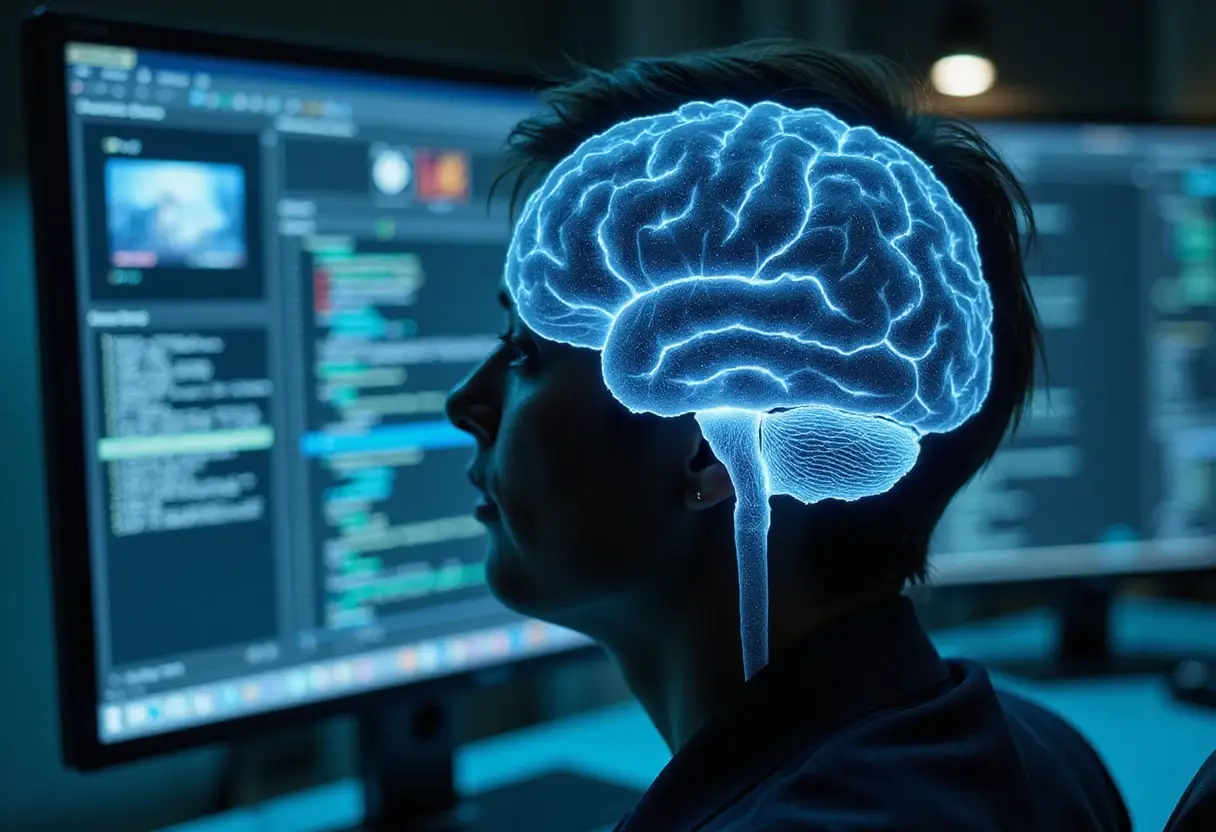
A new editorial published in Frontiers frames the field of passive brain-computer interfaces (systems that read ongoing brain activity for state monitoring, without requiring the user to execute deliberate commands) as having reached the point where laboratory validation must give way to deployment outside controlled settings.
The editorial, titled "Passive brain-computer interfaces: moving from lab to real-world application," addresses a category of BCI (brain-computer interface) distinct from active systems. Active BCIs ask users to perform an explicit mental task, such as imagined hand movement, to drive an output. Passive BCIs instead infer cognitive or affective state — workload, fatigue, attention — from spontaneous neural signals while the user performs their normal activities.
That distinction carries practical weight for clinical neurophysiology. Passive operation imposes requirements that conventional laboratory paradigms do not: tolerance to movement artifact, robustness to electrode impedance drift over hours rather than minutes, and classification algorithms that remain stable when the user is walking, driving or working rather than seated in a shielded room.
What does the shift change for the reading room and the monitoring unit?
For neurophysiologists, the editorial's premise points to a future in which EEG-derived metrics extend beyond diagnostic tracings. A passive BCI built on scalp EEG could, in principle, supply continuous workload or drowsiness estimates in settings such as transport, rehabilitation and intensive care, where intermittent review of records leaves gaps.
The editorial situates itself as a synthesis of research contributions collected under its topic. Its core argument is directional: the enabling methods — electrode hardware, signal processing, machine-learning classifiers — have matured inside laboratories, and the binding constraint is now translation into ecologically valid, real-world conditions rather than further benchmarking in artificial tasks.
Why translation is harder than accuracy gains
Real-world deployment changes the statistical structure of the input signal. Laboratory datasets are typically balanced, short and artifact-poor. Field data are none of these. A classifier trained on seated, cued sessions can degrade sharply once the same user moves, changes environment or shifts task, a problem the field terms non-stationarity (signal distributions that change over time and context).
The editorial's framing implies a research agenda centered on this gap: passive BCI work must demonstrate reliability under the very conditions — ambulation, distraction, prolonged wear — that laboratories exist to exclude. It is an engineering and validation problem more than a discovery problem.
Claims kept to method
Consistent with the editorial's scope, the relevant evidentiary standard remains the study-level demonstration: passive BCIs have shown, in controlled experiments, that features extracted from ongoing EEG (electroencephalography, the recording of electrical brain activity from scalp electrodes) can track cognitive state above chance. The editorial does not assert clinical approval, regulatory clearance or validated deployment of any specific passive BCI device, and readers should treat marketed claims accordingly.
The distinction between investigational systems and cleared devices matters here. Passive BCI research remains largely investigational. No regulatory status, patient-population figure or trial outcome is reported in the editorial itself, which functions as a framing document for a body of collected research rather than as a primary clinical trial report.
The path the editorial maps
The editorial's contribution is to name the transition explicitly. Its argument — that the field's next phase depends on leaving the laboratory — sets a benchmark for future work: studies conducted in real environments, with unobtrusive hardware, reporting performance metrics that survive the messiness of actual use.
For clinical neurophysiologists, the practical takeaway is preparatory rather than immediate. If passive BCI methods mature as the editorial anticipates, continuous EEG-based state monitoring could become a routine adjunct in occupational, rehabilitative and critical-care contexts, and departments that already maintain long-term EEG infrastructure will hold the relevant signal-acquisition expertise.
The editorial marks the field's stated turn toward that next stage.
Based on
Olivia Hart
Show full bio
Correspondent covering people, launches and day-to-day practice in Clinical neurophysiology and EEG interpretation at EEG Signal.