Seizure Monitoring Trial Links Prolonged EEG to Sharper Epilepsy Diagnosis
A clinical trial reported by Digital Journal ties structured seizure monitoring to measurable gains in epilepsy diagnostic accuracy. Cohort size, recording duration, and platform specifics remain undisclosed in the headline summary.
Updated
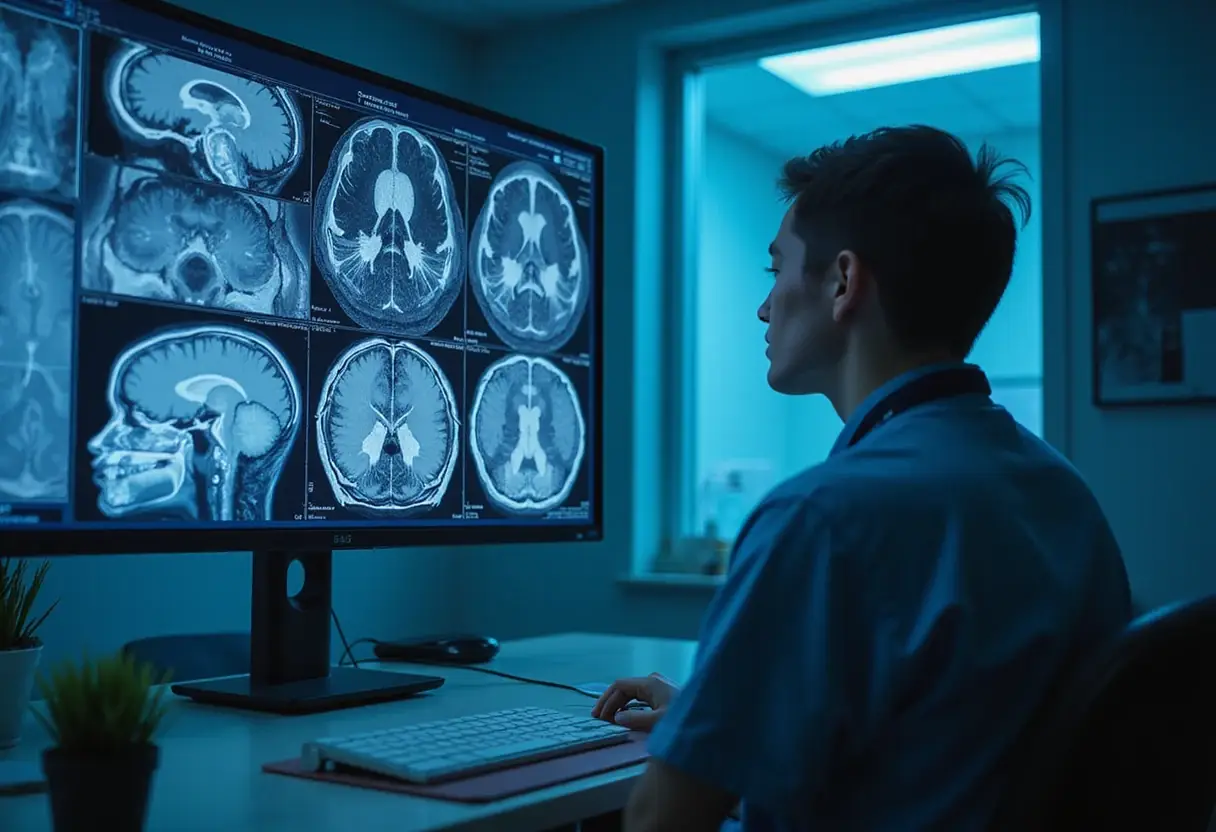
A clinical trial reported by Digital Journal this week has tied structured seizure monitoring to measurable gains in epilepsy diagnostic accuracy, according to the outlet's headline summary of the study.
The investigation centers on prolonged electroencephalographic (EEG) recording — the standard electrophysiological modality for capturing ictal (seizure) and interictal (between-seizure) cerebral activity — and reinforces a clinical premise of long standing: that brief routine EEG studies often miss diagnostically decisive events, and that extended monitoring raises the yield of captured abnormalities.
For the monitoring unit and the reading room, the translation is operational. Prolonged scalp EEG, and when warranted intracranial EEG — also called electrocorticography (ECoG) — supplies the temporal and spatial resolution required to separate epileptic seizures from psychogenic non-epileptic events, convulsive syncope, movement disorders, and parasomnias. Those categories share behavioral features but call for distinct treatment pathways.
The Digital Journal summary does not enumerate the cohort size, recording duration, or the specific monitoring platform deployed. Clinicians awaiting those parameters will look to the published manuscript for the seizure-frequency threshold applied, the reference standard against which monitoring performance was measured (typically video-EEG concordance), and whether the protocol relied on ambulatory or inpatient long-term recording.
What does the trial design usually look like?
Most seizure-monitoring studies enroll adults and adolescents referred from general neurology or emergency settings with paroxysmal events — sudden, episodic neurological symptoms — of uncertain nature. Participants typically undergo 24 to 72 hours of scalp EEG with synchronized video telemetry, with extended stays for patients whose habitual events have not been captured.
Ambulatory EEG systems, cleared by the U.S. Food and Drug Administration (FDA), now serve as either investigational or established comparator arms in modern protocols. Common form factors include:
- adhesive patch arrays
- headband-style recorders
- back-pack amplifiers
How big is the diagnostic gain?
The yield attributable to monitoring is rarely a single figure. Published series report interictal epileptiform discharge rates (spike-and-wave abnormalities recorded between seizures) of roughly 20 to 40 percent on a first routine EEG, climbing toward 50 to 60 percent with a second study and approaching 80 to 90 percent across three or more prolonged recordings in patients with confirmed focal epilepsy.
Event-capture rates during admission-based video-EEG monitoring depend on seizure frequency. Patients with daily events are typically captured within 24 hours, while those with weekly or monthly events may require five days or longer of continuous recording.
What does the new trial add?
The Digital Journal headline states that structured seizure monitoring improved the diagnostic pathway in the trial — a finding consistent with the field's accumulated evidence base but useful as a contemporary, protocol-level benchmark.
The summary does not specify whether surgical-candidate cohorts, pediatric patients, or post-operative outcomes featured as secondary endpoints. Those details will shape how the results apply to specific clinical populations.
How does this translate to clinical practice?
For the neurophysiology laboratory, the practical message is straightforward. Prolonged monitoring capacity — whether delivered through dedicated epilepsy monitoring units, ambulatory referral pathways, or hybrid inpatient-outpatient models — governs how quickly referring clinicians receive a definitive classification for paroxysmal events.
That classification drives therapy. Differentiation between generalized and focal epilepsy, identification of lesional substrates (abnormal structural lesions) on accompanying magnetic resonance imaging (MRI), and selection of candidates for surgical resection or laser ablation all depend on the electrophysiological characterization that monitoring supplies.
Where does the field go from here?
Neurostimulation candidates include:
- vagus nerve stimulation (VNS)
- responsive neurostimulation (RNS), a closed-loop intracranial device that detects and aborts seizure activity
- deep brain stimulation (DBS) targeting structures such as the anterior nucleus of the thalamus
Each option requires precise electrophysiological localization that only prolonged recording can provide.
As ambulatory EEG hardware continues to receive FDA clearance and as automated detection algorithms mature, forthcoming trials will likely test whether outpatient pathways match the diagnostic yield of inpatient video-EEG telemetry for patients with frequent events — a question the current protocol may help frame but does not, on the available headline evidence, resolve.
Based on
Source: Google News: Epilepsy monitoring.
Priya Raman
Show full bio
Market editor covering regulation, policy and their impact on Clinical neurophysiology and EEG interpretation at EEG Signal.