BCI Designed to Cooperate With, Not Override, Brain Activity
Medical Xpress flags a BCI built to cooperate with native brain activity rather than override it. Full method details pending; we assess what the design framing means for neurophysiology.
Updated
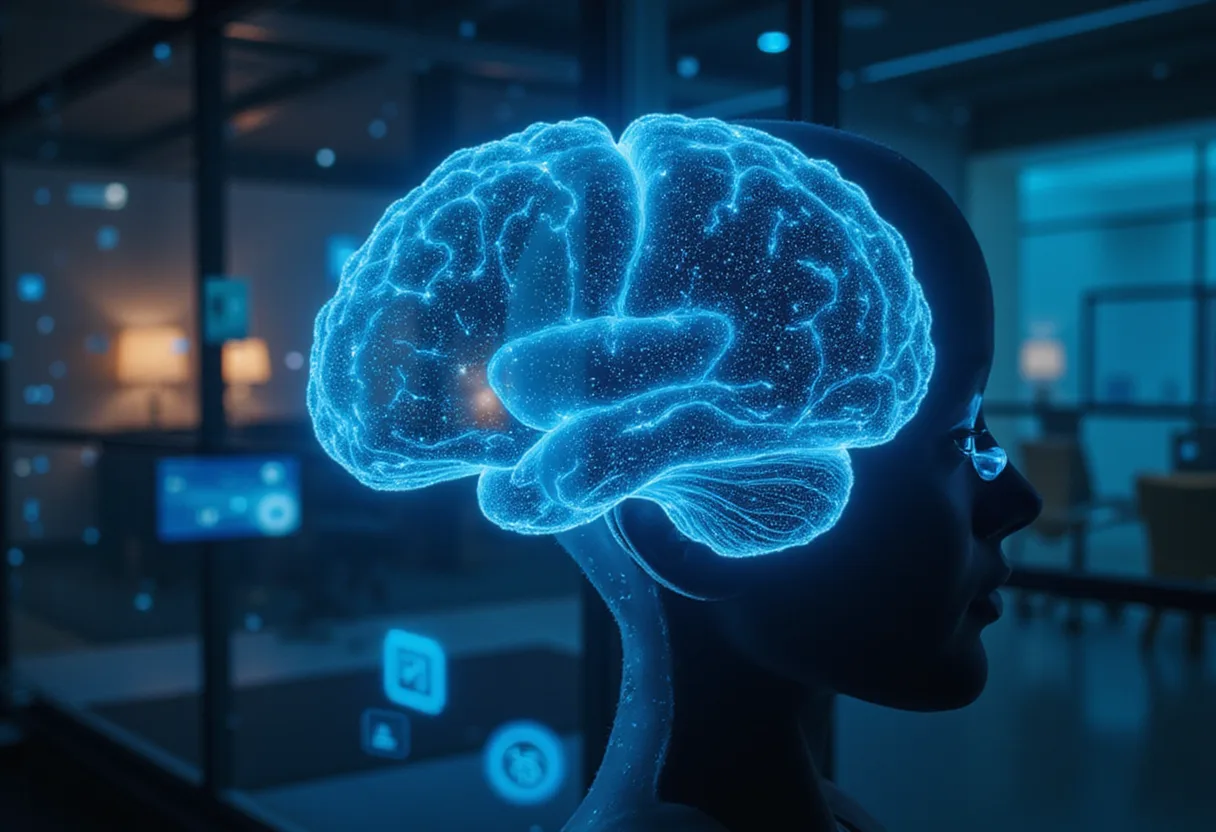
Medical Xpress has published a piece under the headline "A brain-computer interface that works with—not against—the brain," drawing attention to a design philosophy in the BCI field that departs from the dominant engineering paradigm.
Most implanted brain-computer interfaces in clinical development today work by decoding neural signals and translating them into external device commands — a prosthetic arm grasp, a cursor movement, synthesized speech. The decoding pipeline treats the brain primarily as a signal source to be read out. The approach highlighted in the Medical Xpress report takes a different stance: the interface is engineered to operate in concert with the brain's own processing rather than superseding it.
Why the distinction matters for clinical neurophysiology
Readers who follow the intracranial EEG and ECoG literature will recognize the underlying tension. Bidirectional BCIs — systems that both record and stimulate — must contend with the fact that stimulation itself alters the very signals the decoder relies on. An interface that injects commands or feedback without accounting for ongoing cortical dynamics risks fighting the network it is trying to assist. Designs that adapt to, or exploit, endogenous brain rhythms and plasticity mechanisms may prove more stable over long implant durations, a chronic problem for electrode arrays whose single-unit yields typically decline over months.
What we can and cannot confirm from this source
The editorial team at EEG Signal must be direct with readers here: the syndicated feed item available to us consists of the headline and publication attribution only. The full article text was not retrievable at press time. We therefore cannot yet verify from this source the specific modality involved — whether the system relies on intracranial single-unit arrays, ECoG strips or grids, or non-invasive scalp EEG — the identity of the research group, the patient population or animal model, the trial phase, or any performance metrics such as decoding accuracy, information transfer rate, or days of stable operation.
We decline to speculate beyond the headline. In the BCI space especially, the gap between a demonstrated capability in a bench prototype, an animal model, and an FDA-cleared or even IDE-exempt human investigational device is wide, and responsible coverage names the recording method and the evidence tier for every claim. Several prominent BCIs described in similar terms have spanned the full range: micro-electrocorticographic arrays in participants with spinal cord injury, chronic intracortical multi-electrode systems in ALS, and entirely preclinical work in non-human primates.
The design question behind the headline
That said, the framing itself — cooperation versus opposition — maps onto a genuine and active debate in the neuroengineering literature.
One school of thought optimizes decoders to extract maximal information from recorded spikes or field potentials, with the brain adapting to the decoder through operator training and neurofeedback. The alternative approach builds the interface to respect and harness the brain's existing computational structure: closed-loop systems that trigger stimulation or feedback contingent on detected cortical states, adaptive decoders that track non-stationary neural populations over time, and designs that leverage residual pathway function rather than replacing it wholesale.
For monitoring-unit and reading-room practice, this debate is not purely academic. Closed-loop implanted devices are increasingly presenting in epilepsy centers — responsive neurostimulation systems that detect ictal patterns on intracranial contacts and deliver stimulation in real time already sit squarely in this cooperative design category. Electrophysiologists reading chronic ambulatory EEG from such devices see daily how detection algorithms and endogenous brain activity interact, sometimes harmoniously, sometimes with artifacts and false triggers that complicate the review. Any advance in interfaces that better model native brain dynamics would have read-through implications for how these chronic recordings are interpreted.
Next steps for our coverage
We will monitor this story and update readers once the full article and any underlying publication or preprint become accessible. Specific items our editors will look for before treating the work as clinically relevant: the recording modality and electrode configuration; whether the evidence is animal or human; cohort size and diagnosis; duration of implantation and signal stability; and any regulatory status — investigational, IDE trial, or cleared.
Until those details surface, the headline stands as a marker of a direction in BCI engineering worth watching: interfaces designed as partners to cortical computation rather than replacements for it. How far the reported system has traveled from concept to validated demonstration is precisely what the full report needs to establish.
Based on
Priya Raman
Show full bio
Market editor covering regulation, policy and their impact on Clinical neurophysiology and EEG interpretation at EEG Signal.