Cleveland Clinic AI Brain Monitoring: The Forbes Report
A Forbes feature places Cleveland Clinic at the center of clinical AI brain monitoring. The institutional case mix — high-volume epilepsy surgery and continuous ICU EEG — will test whether algorithms can handle artifact-heavy reality.
Updated
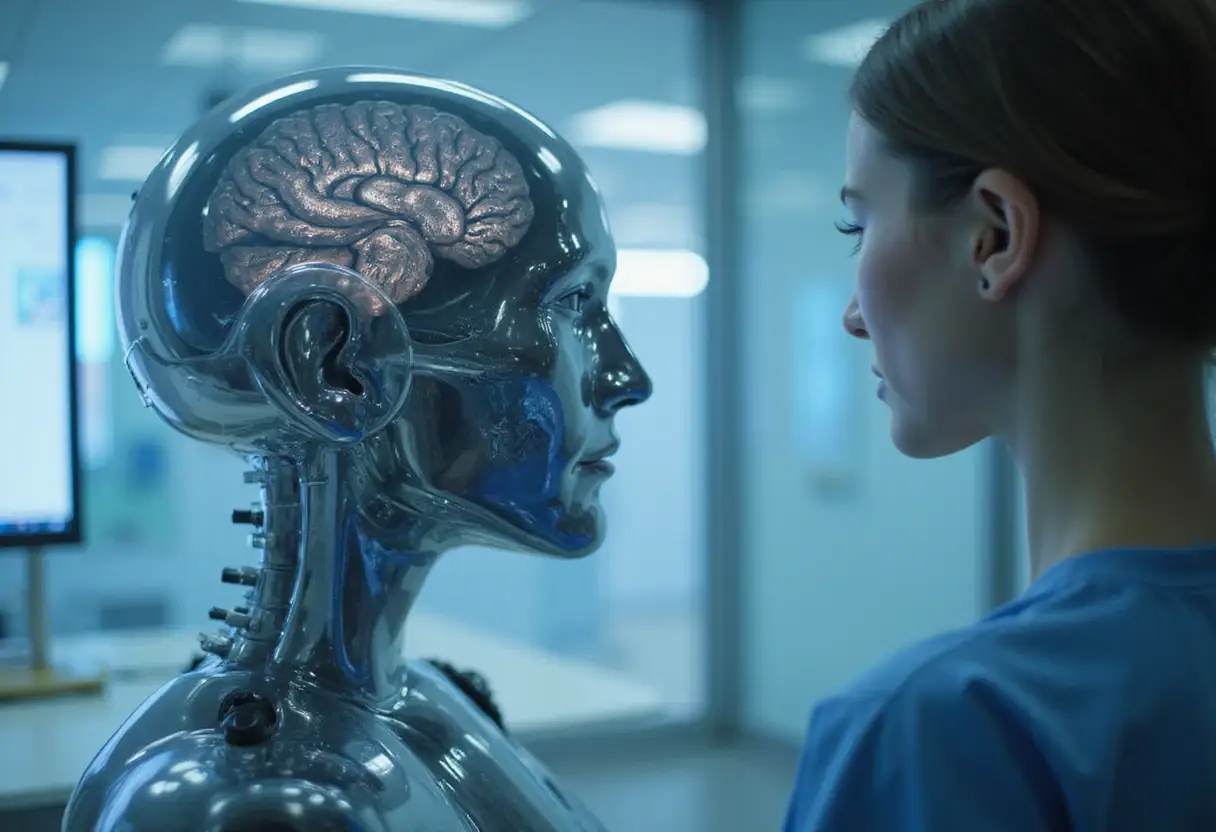
Cleveland Clinic is developing artificial intelligence for clinical brain monitoring, according to a Forbes feature titled "How Cleveland Clinic Is Developing AI To Monitor The Brain." The piece places one of the country's largest neurology services at the center of a question the neurophysiology community has been circling since commercial seizure detection software reached the ICU: whether algorithms can do clinically defensible work in the reading room and at the bedside.
The Cleveland Clinic enterprise runs a high-volume epilepsy surgery program, a continuous EEG service that handles status epilepticus and anoxic injury without interruption, and a post-operative neuromonitoring footprint that consumes technologist hours faster than most institutions can hire them. Any AI tool the institution fields will eventually be tested against that case mix. The Forbes coverage signals that work has moved beyond proof-of-concept.
What does the feature actually claim?
The headline frames a "how" story. Forbes reporting on institutional AI development typically names the executives steering the work, the funding lines supporting it, and the specific clinical or operational problem the tool is meant to solve. Readers should expect names, dollar figures, timelines, and a stated deployment target. The headline does not, on its own, name the modality — scalp EEG, intracranial recordings, or both — or the specific clinical question being addressed.
For clinical neurophysiologists, that absence is the story. Modality determines everything downstream: electrode density, sampling rate, artifact handling, and the regulatory pathway a tool must clear before it can sit next to a bedside monitor.
Why this matters in the reading room
Automated EEG is not a new category. Quantitative EEG trend panels, FDA-cleared seizure detection algorithms, and ICU-focused event detection software have lived in commercial platforms for over a decade. They have reduced — though not eliminated — the burden of continuous review on overnight readers. They have also produced a steady stream of false positives that experienced technologists learn to triage.
The newer generation of models, built around transformer architectures and large annotated EEG datasets, promises better generalization across pathologies, age groups, and recording conditions. Whether this promise survives contact with the artifact-heavy reality of an ICU recording — the rhythmic electrode pops, the ventilator signature, the muscle contamination of an agitated patient — is the open question.
A Cleveland Clinic effort that lands in the epilepsy monitoring unit or the ICU would test whether institutional scale and curated datasets can produce a tool that performs above the current ceiling.
What the field is watching
The questions that matter for practicing neurophysiologists are mundane and load-bearing. Will the system read scalp EEG, intracranial recordings, or both? How does it perform on the artifacts that dominate ICU tracings? What is the false alarm rate during a 24-hour shift, and how does it change when the patient's underlying rhythm shifts? Who carries liability when the model misses a non-convulsive seizure or calls one that is not there?
The Forbes headline does not answer any of these. It does suggest they are being written somewhere in Cleveland.
What does this change for the monitoring unit?
For an epilepsy monitoring unit, the upside is straightforward. A tool that triages long-term recordings with calibrated sensitivity could shift technologist time from screen-watching to clinical correlation. For an ICU service, the upside is sharper still. A model that flags non-convulsive status epilepticus within minutes rather than hours would change outcomes in patients who cannot wait for the next routine read.
The catch, as always, is generalization. A model trained on a single institution's recording conventions, electrode placements, and patient population tends to perform less well when ported elsewhere. Cleveland's dataset is large; whether it is representative of the average community hospital EEG lab is a separate question.
The Forbes feature, by its framing, promises answers to at least some of these. The full reporting will tell clinical neurophysiologists whether to plan a workflow change or file it alongside the other institutional AI announcements that have come and gone.
Based on
Source: Google News: EEG.
Elena Vasquez
Show full bio
News editor covering people, launches and day-to-day practice in Clinical neurophysiology and EEG interpretation at EEG Signal.