Frontiers review maps BCI evidence for severe-stroke motor rehabilitation
A narrative review in Frontiers consolidates evidence on brain-computer interfaces for motor rehabilitation in severe stroke, contrasting non-invasive EEG decoders with intracortical and ECoG systems.
Updated
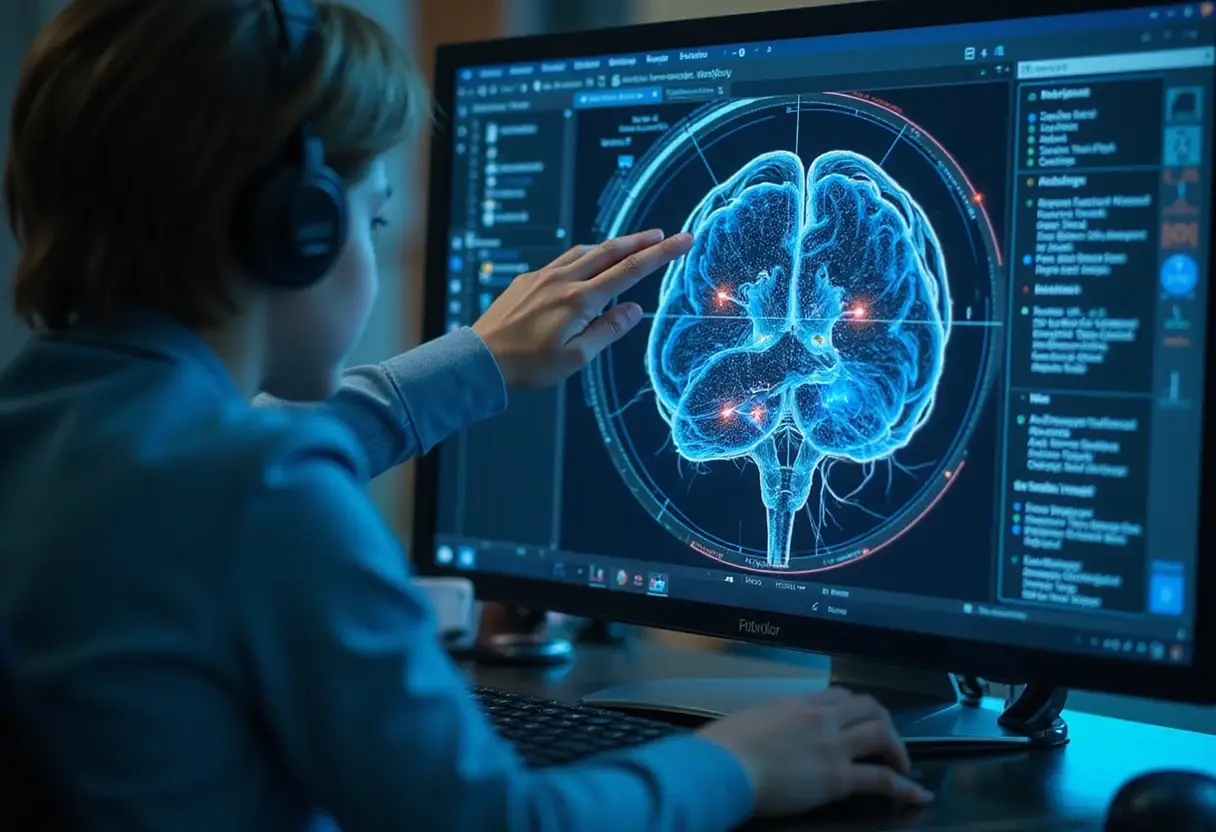
A narrative review published on the Frontiers platform consolidates current evidence on brain-computer interface (BCI) technology applied to motor rehabilitation in patients with severe stroke. The article, titled Brain-computer interface technology for motor rehabilitation in severe stroke: a narrative review, positions BCI as a candidate therapeutic pathway when conventional physiotherapy leaves persistent deficits.
What does a narrative review add to the field?
The review sits at the intersection of clinical neurophysiology and neurorehabilitation. Severe stroke — typically classified by National Institutes of Health Stroke Scale scores above 15 or by extensive corticospinal tract damage on imaging — produces chronic motor impairment in roughly one-third of survivors. Restoring upper-limb function in this group remains an unmet need. Conventional constraint-induced movement therapy and task-oriented training require residual voluntary movement, which patients with severe paresis often lack. BCIs bypass that limitation by decoding motor intent directly from cortical activity and routing it to an effector: an orthosis, a functional electrical stimulator, or a robotic exoskeleton.
The narrative review format differs from systematic review and meta-analysis methodology. Narrative reviews allow authors to summarize a field, identify methodological trends, and flag research gaps without the preregistered search strings, dual independent screening, or quantitative pooling that systematic reviews demand. Readers should treat the synthesis as expert-curated rather than as an effect-size estimate. For the clinical neurophysiology audience, the value lies in the framework the authors impose on heterogeneous studies that mix scalp EEG, intracranial recordings, and ECoG-based decoders.
Which recording modalities does the field actually use?
Most BCI work in stroke motor rehabilitation uses non-invasive scalp EEG because of its safety profile and bedside deployability. The motor-imagery paradigm — where a patient attempts or imagines moving the paretic limb while the system decodes the resulting mu and beta rhythm desynchronization — remains the dominant decoding target. Signal quality is the bottleneck: scalp EEG captures volume-conducted activity with low spatial resolution, and a substantial fraction of severely impaired patients cannot produce reliably classifiable motor imagery patterns. This phenomenon, sometimes called BCI illiteracy, has driven trials of alternative decoders, including error-related potentials, steady-state evoked potentials triggered by peripheral stimulation, and hybrid EEG-fNIRS or EEG-EMG systems.
Implantable systems, principally intracortical microelectrode arrays and ECoG grids, can sample higher-fidelity signals and have powered proof-of-concept demonstrations in small cohorts, including the BrainGate consortium's work with tetraplegic participants. Translation to severe stroke — where the lesion itself may alter or eliminate the cortical substrates the decoder relies on — is less mature. A narrative review is well placed to map which recording modalities and decoder families have been tried in this specific population and where the evidence base thins out.
What does the BCI control loop look like in practice?
Rehabilitation BCIs typically operate in one of two control loops. The first decodes movement intent and drives an external actuator that the patient sees moving. The second closes the loop through the patient's own nervous system by triggering functional electrical stimulation of paretic muscles, producing contingent somatosensory feedback. The latter is often described as Hebbian-style associative plasticity: timed cortical activation followed by peripheral feedback may reinforce residual corticospinal pathways. The literature in this area consistently reports small sample sizes, heterogeneous outcome measures, and short follow-up, which complicates comparison across studies and weakens any inference about long-term functional gain.
Is any of this FDA-cleared for stroke?
For monitoring units and rehabilitation wards, the practical question is not whether BCI works in principle but whether a clinically deployable system exists for the severe-stroke population. The answer today is that no FDA-cleared BCI system is approved specifically for post-stroke motor rehabilitation, although the regulatory environment is moving. Devices cleared for other indications are being investigated off-label, and investigational systems are running in academic centers. The Frontiers review will likely be read as a stock-taking exercise for clinicians and engineers deciding which decoding modality, which effector, and which patient phenotype to prioritize in the next trial generation.
Based on
Priya Raman
Show full bio
Market editor covering regulation, policy and their impact on Clinical neurophysiology and EEG interpretation at EEG Signal.