Nature Study: VR-BCI Training Boosts Sensorimotor Neuromodulation
VR-mediated brain-computer interface training improved sensorimotor neuromodulation in both unimpaired participants and individuals with chronic spinal cord injury, according to a Nature paper using a dual-cohort design.
Updated
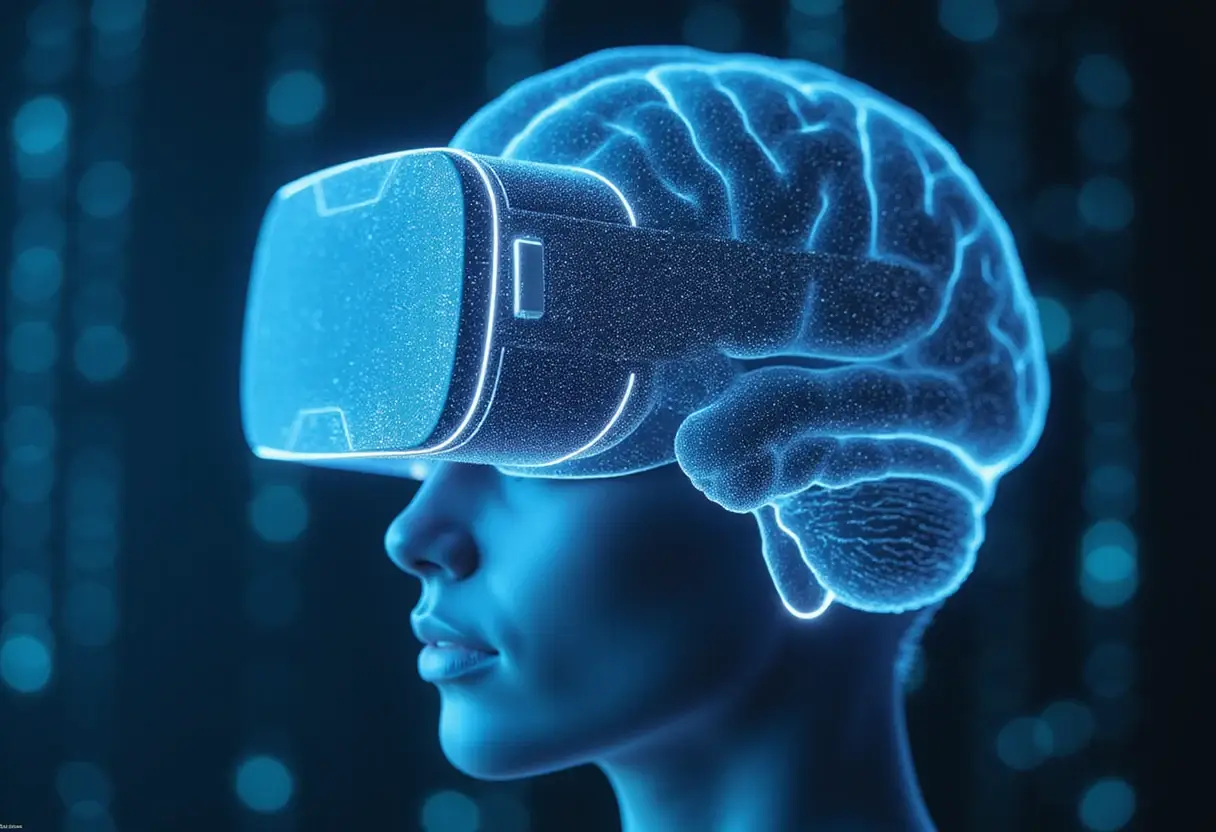
A Nature paper reports that a brain-computer interface (BCI) training protocol delivered through virtual reality improved sensorimotor neuromodulation in both unimpaired participants and individuals with chronic spinal cord injury (SCI).
The paper, titled "Virtual reality mediated brain-computer interface training improves sensorimotor neuromodulation in unimpaired and post spinal cord injury individuals," uses a dual-cohort design that contrasts neurotypical controls with post-SCI users — a population of central interest for motor-recovery BCI research.
Nature indexed the work in its general-science portfolio rather than a specialist clinical neurophysiology title. The framing — immersive VR combined with BCI training to drive sensorimotor neural change — sits inside protocols already familiar to rehabilitation neurotechnology groups, and the broad-journal placement suggests the editors viewed the result as relevant beyond the BCI specialist audience.
What does "sensorimotor neuromodulation" capture here?
The outcome named in the title encompasses changes in motor-cortex excitability, event-related desynchronization during imagined or attempted movement, or shifts in sensorimotor rhythm power measured during training. These metrics matter because BCI decoders depend on stable, task-locked cortical signatures, and training effects on those signatures predict how well a given user will operate a motor-imagery-driven system.
A dual-cohort comparison lets the authors test two things at once: whether the same VR-mediated BCI practice produces neuromodulatory effects in intact nervous systems, and whether those effects persist, attenuate, or remodel in chronic SCI, where cortical reorganization after deafferentation is the rule rather than the exception.
Why pair VR with BCI training?
Virtual reality has entered BCI pipelines to standardize visual feedback during motor-imagery or attempted-movement tasks. The substitution of an avatar-driven or task-driven scene for an abstract screen cursor is more than cosmetic: it concentrates attention on a realistic sensorimotor contingency, the perceived match between attempted action and its visual outcome.
For SCI users in particular, where motor imagery can be degraded by reduced proprioceptive access, that contingency may matter more than the underlying decoder. VR also shortens the perceived time between intent and feedback, a key variable in operant-style BCI learning paradigms.
What does the dual-cohort result signal for the lab?
For monitoring and rehabilitation research teams, the title's two-population framing flags two operational questions:
- Can a single BCI calibration pipeline serve both able-bodied and chronic-SCI users without per-population retuning?
- Does VR-mediated training leave a neuromodulatory footprint outside the BCI session, for example on resting rhythms, motor-evoked potentials, or somatosensory gating measures?
Both questions will shape how clinical neurophysiology labs justify BCI deployment in SCI rehabilitation pathways, especially as payers and regulators press for evidence of carryover beyond the training session itself.
What the indexed record does and does not yet show
The peer-reviewed Nature status is confirmed. The public indexing data available at the time of writing provides only the title, however. Full methods — the recording modality (most plausibly scalp EEG for a non-invasive BCI, though the indexed record does not state it), the cohort sizes, the intervention duration, and the reported effect magnitudes — remain to be checked against the published article.
Until those details are in hand, the field should treat the indexed result as a directional signal rather than a settled benchmark.
Where this goes next
If the full text confirms a durable sensorimotor effect with VR-mediated BCI training in chronic SCI, the work would sit alongside recent investigations pushing non-invasive BCIs into longer-duration home deployment. It would also push back against the long-standing concern that motor imagery in paralyzed users produces weaker cortical targets than in able-bodied users — a concern that has shaped calibration strategies for years.
The Nature acceptance alone qualifies the result as a general-journal endorsement of a VR-mediated BCI protocol spanning intact and chronically injured cohorts, a baseline the field will now have to address in subsequent peer-reviewed work, and one the EEG and clinical-neurophysiology community will likely cite as the reference point for VR-BCI rehabilitation studies in the coming year.
Based on
Elena Vasquez
Show full bio
News editor covering people, launches and day-to-day practice in Clinical neurophysiology and EEG interpretation at EEG Signal.