Nature Study: Global Context Yields Drug-Resistant Sleep Scoring
A Nature study shows preclinical sleep stage classification can stay robust under drug challenge by integrating global context across the EEG recording instead of scoring epochs in isolation.
Updated
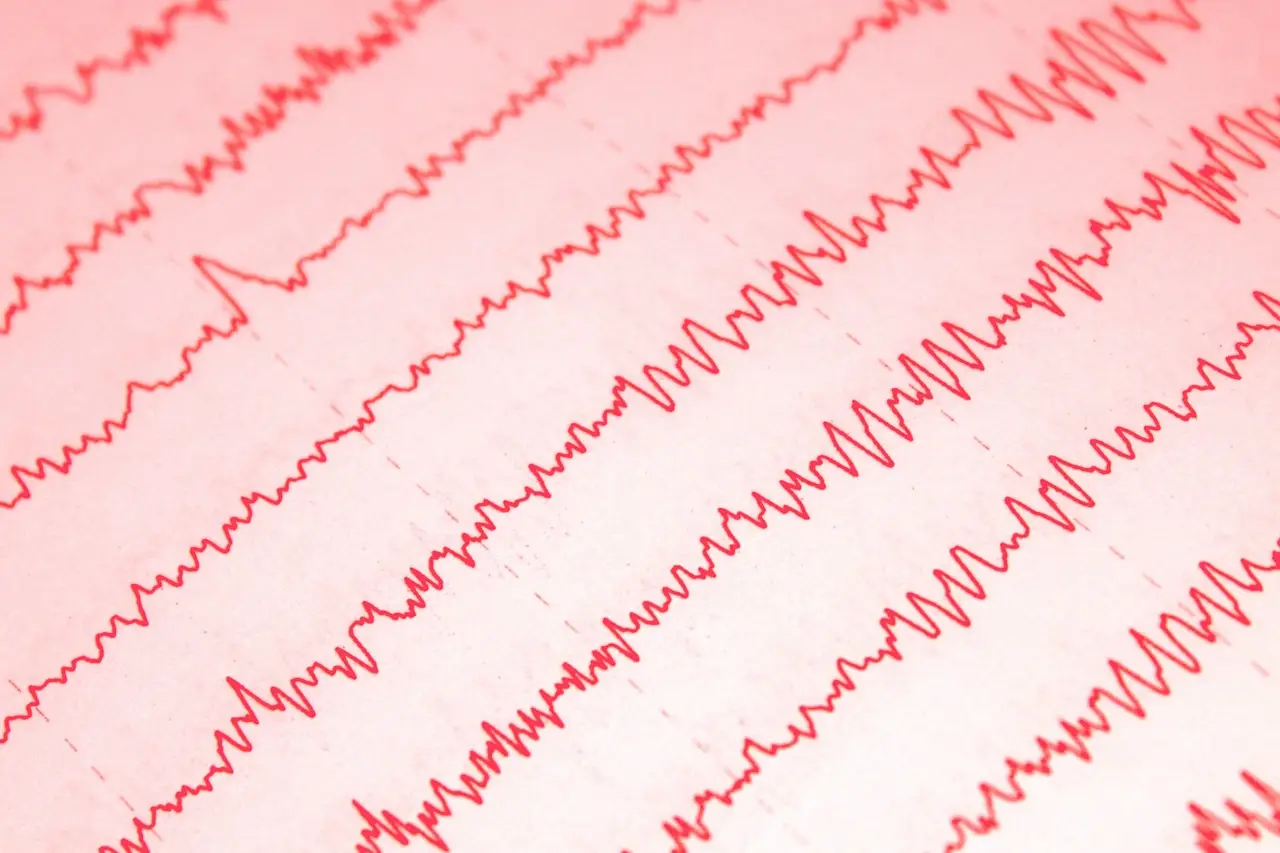
A study published in Nature introduces a sleep stage classification approach for preclinical research that remains robust when animals are dosed with drugs known to distort standard scoring. The method's central technical move is global context integration: rather than reading each EEG epoch in isolation, the model weighs the surrounding recording so that a pharmacologically altered epoch is interpreted against the structure of the whole sleep record.
The problem the paper addresses is concrete. In drug discovery and toxicology, candidate compounds frequently change sleep architecture — suppressing REM, fragmenting non-REM, lengthening transitions. Classical scoring rules and most automated classifiers were trained on undrugged baseline recordings. Under compound challenge, their agreement with expert human scorers degrades, and preclinical sleep endpoints become noisy precisely where they matter most.
Why is pharmacological robustness hard?
Preclinical sleep staging rests on continuous EEG plus EMG (electromyography, the muscle-signal channel used to separate wake from sleep) recorded in rodents. Scorers, human or machine, divide the trace into fixed epochs and assign each a stage: wake, non-REM or REM.
The difficulty is that sedatives, hypnotics and stimulants uncouple the usual relationships between the EEG signature and the behavioural state. A drugged animal can show non-REM-like scalp-equivalent cortical EEG while behaviourally awake. A classifier that has learned only local epoch features has no principled way to resolve the ambiguity.
Global context integration attacks this directly. By carrying information across the recording — across state transitions, across the night — the model can anchor an atypical epoch within its temporal neighbourhood. The Nature paper frames this as the difference between reading a single word and reading the sentence around it.
What did the study demonstrate?
The authors evaluated the approach on preclinical recordings under pharmacological manipulation, benchmarking against conventional scoring pipelines that degrade under the same conditions. Their central claim is methodological: integrating global context produces stage classifications that stay close to expert labels even when the drug shifts the EEG away from baseline characteristics.
Readers should note the scope. This is animal work, and it is investigational research, not a cleared clinical product. No claim in the paper extends to human polysomnography, and none of the described tools carries FDA clearance for clinical sleep scoring.
What does this mean for the reading room?
For clinical neurophysiology teams, the practical relevance is indirect but real. Automated scoring already assists in human sleep laboratories, and every vendor faces the same failure mode the Nature authors target: recordings from medicated patients — hypnotics, antidepressants, antipsychotics — fall outside the distribution on which scoring algorithms were trained.
A context-aware architecture that tolerates pharmacological shift would translate naturally to hospital sleep studies, where polypharmacy is the rule rather than the exception. Epilepsy monitoring units, where sedating medications are routine and sleep staging feeds seizure-detection logic, would be an early beneficiary if the approach transfers across species.
The study also sharpens a methodological standard. Any lab reporting preclinical sleep endpoints under compound dosing now has a demonstrated reason to validate its scorer against drugged, not only baseline, recordings. Cross-validation on clean data can overstate a pipeline's readiness.
What comes next?
The obvious extension is validation in human polysomnography cohorts with documented medication loads — the step that would separate a strong preclinical result from a clinical tool. Until then, the work stands as a carefully bounded demonstration: global context, not local features alone, is what makes sleep staging survive the pharmacology.
By Priya Raman
Based on
Source: Google News: EEG.
Priya Raman
Show full bio
Market editor covering regulation, policy and their impact on Clinical neurophysiology and EEG interpretation at EEG Signal.