Neurable Builds EEG Sensor Into Everyday Headphones to Track Brain Fatigue
Neurable has packed EEG sensors into wireless headphones to score how close a wearer's brain is to burnout, moving dry-electrode brain recording into everyday consumer wear.
Updated
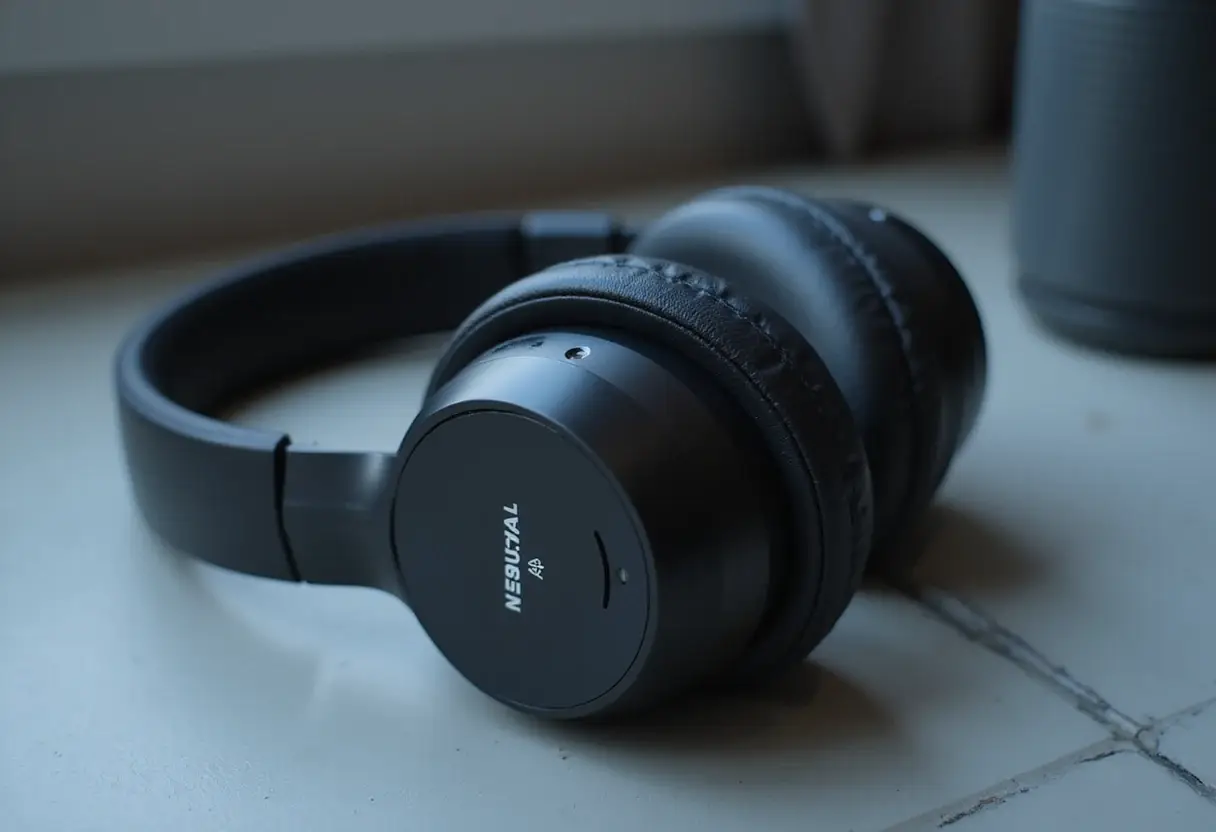
Neurable, the consumer neurotechnology company best known for brain-controlled interfaces, has turned its attention to a different problem: burnout. The company has built EEG sensors into a pair of ordinary-looking wireless headphones, according to a Gizmodo report, with the goal of continuously tracking how close a wearer's brain is to a state of exhaustion.
The concept marks a shift in where and how electroencephalography happens. Conventional scalp EEG requires a cap, conductive gel or paste, and a technician — conditions that confine the modality to labs, sleep clinics, and epilepsy monitoring units. Neurable's hardware instead lives inside a device millions of people already wear on their heads for hours a day. That form factor is the entire clinical and commercial argument: long-duration, real-world brain data that hospital-grade montages were never designed to capture.
What the device claims to do
According to the Gizmodo coverage, the headphones use embedded electrodes to record electrical brain activity and translate it into a metric the company frames as a "burnout" score — an estimate of how close the wearer is to cognitive overload. The pitch targets the office worker, the founder, the always-on professional: instead of recognizing burnout only after performance collapses, the system promises an early-warning readout drawn directly from neural signals.
The underlying logic has precedent in the research literature. Quantitative EEG studies have long associated mental fatigue with measurable spectral shifts — typically rising theta power over frontal and central regions alongside falling alpha and beta activity — and several validated algorithms derive fatigue indices from such features. Whether Neurable's consumer implementation follows this approach, and how it validates its burnout metric against established fatigue scales or expert EEG interpretation, the report does not specify. Those are exactly the questions a clinical neurophysiologist would ask first.
Consumer hardware, investigational framing
There is no indication in the coverage that the device holds or seeks FDA clearance for any diagnostic purpose. As described, it is a wellness and consumer-electronics product, not a medical monitor — a distinction worth stating plainly. No claims of diagnosing depression, anxiety disorders, or any neurological disease attach to the hardware as reported. Burnout itself is an occupational phenomenon rather than a coded diagnosis in most classification systems, which keeps the product on the wellness side of the regulatory line for now.
The electrode count, sampling rate, reference scheme, and dry-versus-wet electrode design are not detailed in the Gizmodo piece, and any assessment of signal quality would depend on those specifications. Consumer dry-electrode systems generally trade signal fidelity for convenience: fewer channels, higher impedance, greater motion artifact. For spectral-band fatigue estimation, that compromise can be acceptable. For anything resembling diagnostic EEG review, it is not — and nothing in the report suggests Neurable is claiming otherwise.
Why the reading room should care
For clinical neurophysiologists, the product is interesting less as an instrument than as a signal of where EEG is heading. Ambulatory and long-term monitoring already pushed recording out of the lab; companies like Neurable are pushing it out of medicine altogether. If millions of consumers begin wearing functioning EEG electrodes daily, the field will face a growing body of self-collected neural data — some of it eventually landing in neurology clinics, with patients asking their epileptologist what their headphone readout means.
There is also a research opportunity. Continuous, ecologically valid EEG recordings spanning full workdays could give fatigue researchers datasets that lab protocols, limited to one- or two-hour sessions, cannot match. Neurofeedback and closed-loop interventions — a headphone that not only detects overload but prompts a break — are the obvious next iterations, though the report describes only the monitoring function, and any such claim should await demonstration rather than anticipation.
The honest caveats
Burnout is a heterogeneous construct with psychological, behavioral, and physiological dimensions. A single EEG-derived number, however marketed, will not capture all of them. Gizmodo's coverage does not report validation studies, peer-reviewed benchmarks, or comparisons against established measures such as the Maslach Burnout Inventory. Until such data exist, the device's score should be read as an experimental biomarker of mental fatigue — potentially useful, explicitly unproven as a burnout measure.
Consumers and clinicians alike should also weigh what continuous brain data collection means for privacy. Who stores the recordings, who can access them, and whether they could someday interest insurers or employers are questions the consumer neurotech industry has not fully answered.
Neurable's move suggests the company sees daily mental-state monitoring, not hands-free control, as the near-term mass market for brain-sensing wearables. Whether an EEG headphone can deliver a fatigue metric robust enough to matter — and prove it in peer-reviewed validation — will determine if burnout tracking becomes a genuine physiological tool or a compelling feature that never outgrows its marketing.
Based on
Source: Google News: EEG.
Marcus Bennett
Show full bio
Staff writer covering technology and product news in Clinical neurophysiology and EEG interpretation at EEG Signal.