Pediatric Sleep-Deprived EEG: Necessary Tool or Unjustified Burden?
Neurology Today's headline question on sleep-deprived pediatric EEG forces clinical laboratories to weigh diagnostic yield against the strain placed on families, and the field has not formally revisited the trade-off in years.
Updated
By Elena Vasquez, Senior Editor, EEG Signal
Neurology Today has published an article headlined "Is Sleep Deprivation for Pediatric EEGs an Unnecessary Burden?" — a question whose blunt framing has reopened a long-simmering debate among pediatric EEG laboratories. The piece lands at a moment when protocols for sleep-deprived recording in children have not been formally reviewed across most academic centers in several years.
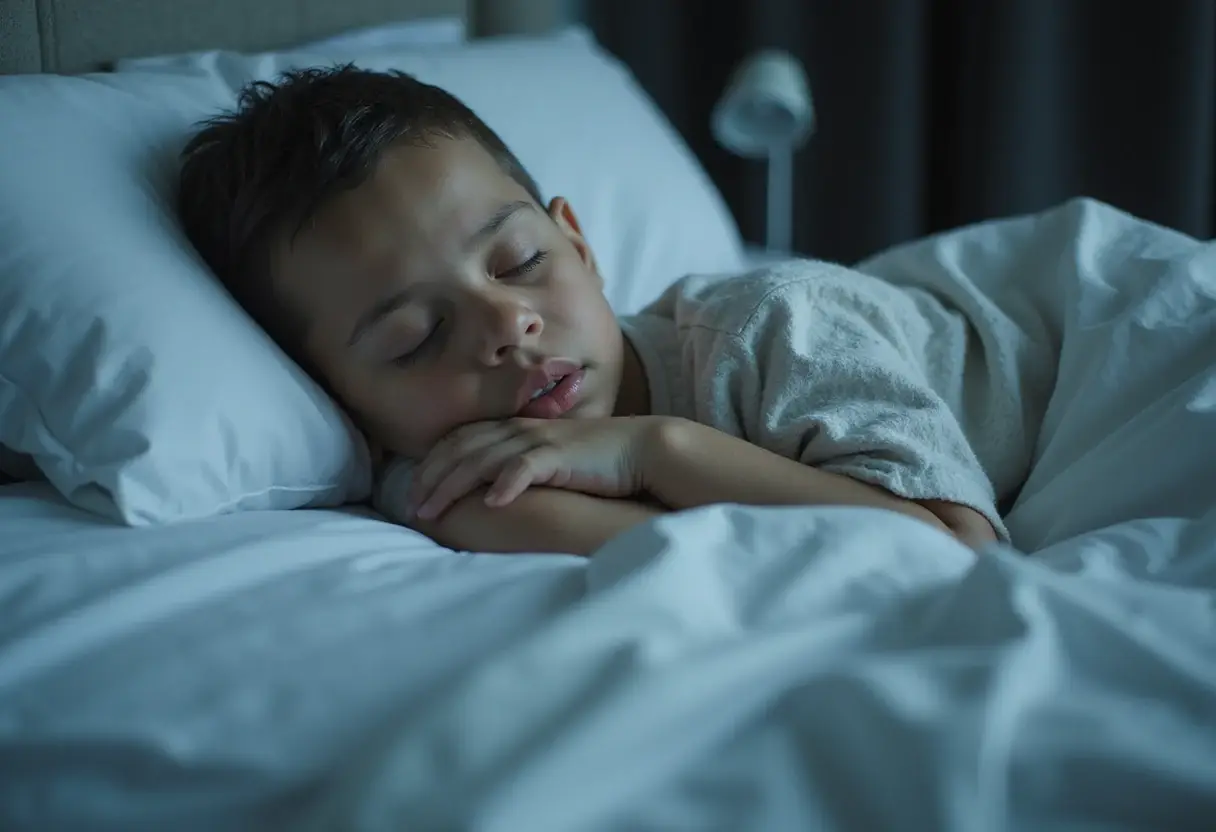
Sleep-deprived EEG has been a standard activation protocol in pediatric laboratories since the technique migrated from adult practice in the 1970s. The method works as follows. Families are instructed to keep a child awake later than usual the night before recording, or to wake the child earlier than normal on the morning of the test. The aim is to push the patient into drowsiness and light sleep during scalp EEG acquisition, increasing the odds of capturing interictal epileptiform discharges that may otherwise remain hidden during a routine awake study.
The premise rests on what every neurophysiology trainee learns in the first month of reading room duty: spike-and-wave discharges fire more often during non-rapid eye movement sleep than during quiet wakefulness. Sleep-depriving the patient, in theory, enlarges the window for catching them.
So why revisit the question now? Neurology Today's framing — "unnecessary burden" — directs suspicion at the family rather than at the recording itself. A toddler kept awake past midnight is a difficult patient. A school-age child woken at four in the morning is a disoriented one. Parents lose sleep. Parents lose workdays. Pediatric EEG laboratories, already strapped for evening and weekend slots, must accommodate appointments that begin at unconventional hours. Some centers have responded by moving pediatric sleep studies into dedicated evening blocks, which adds technician cost without changing the family's experience. Others have moved toward ambulatory scalp EEG acquired at home, recorded in the child's own bed after a brief parental sleep manipulation.
When does sleep-deprived recording actually help?
The reader's practical question is plain: does the extra yield justify the extra pain? The honest clinical answer is that it depends on the question being asked.
For a child with a clear clinical history suggesting generalized epilepsy — episodic staring spells, morning myoclonus, photic sensitivity — a routine outpatient scalp EEG will often suffice. For a child in whom the suspicion is focal epilepsy with rare nocturnal events, or in whom a standard study has returned normal despite a strong clinical story, sleep-deprived recording reliably raises diagnostic yield.
What sleep deprivation does not reliably do, and this is the strain of argument the Neurology Today headline gestures at, is substitute for a structured sleep study when the question is differential. A polysomnogram with extended EEG montage remains the right tool for distinguishing sleep-related epilepsy from primary sleep disorders such as parasomnias or obstructive sleep apnea.
What can laboratories change tomorrow?
Protocols that involve only one to two hours of partial sleep deprivation yield comparable results to full overnight deprivation in the bulk of the published literature; the burden on families can be reduced without sacrificing diagnostic information. Home-based sleep-deprived EEG, acquired with portable scalp EEG equipment, has become a workable alternative for families who cannot travel to a tertiary center. The reading-room practice of reviewing the drowsy and asleep portions of every pediatric tracing remains the single highest-yield intervention any laboratory can make, regardless of which deprivation protocol sits upstream.
The broader debate the Neurology Today piece enters is whether pediatric EEG, as a field, should keep default protocols whose main virtue is familiarity. The field is starting to ask it out loud.
A pediatric laboratory that has not revisited its sleep-deprivation instructions in the last five years has work to do, and the next twelve months of clinical discussion will likely make that review unavoidable.
Based on
Source: Google News: EEG.
Elena Vasquez
Show full bio
News editor covering people, launches and day-to-day practice in Clinical neurophysiology and EEG interpretation at EEG Signal.