Smartwatch App Flags Seizures with Low False-Alarm Rate
A smartwatch app detects seizures with a low false-alarm rate, reports Brain & Life; the wearable uses wrist motion sensing, not EEG, to flag convulsive events at home.
Updated
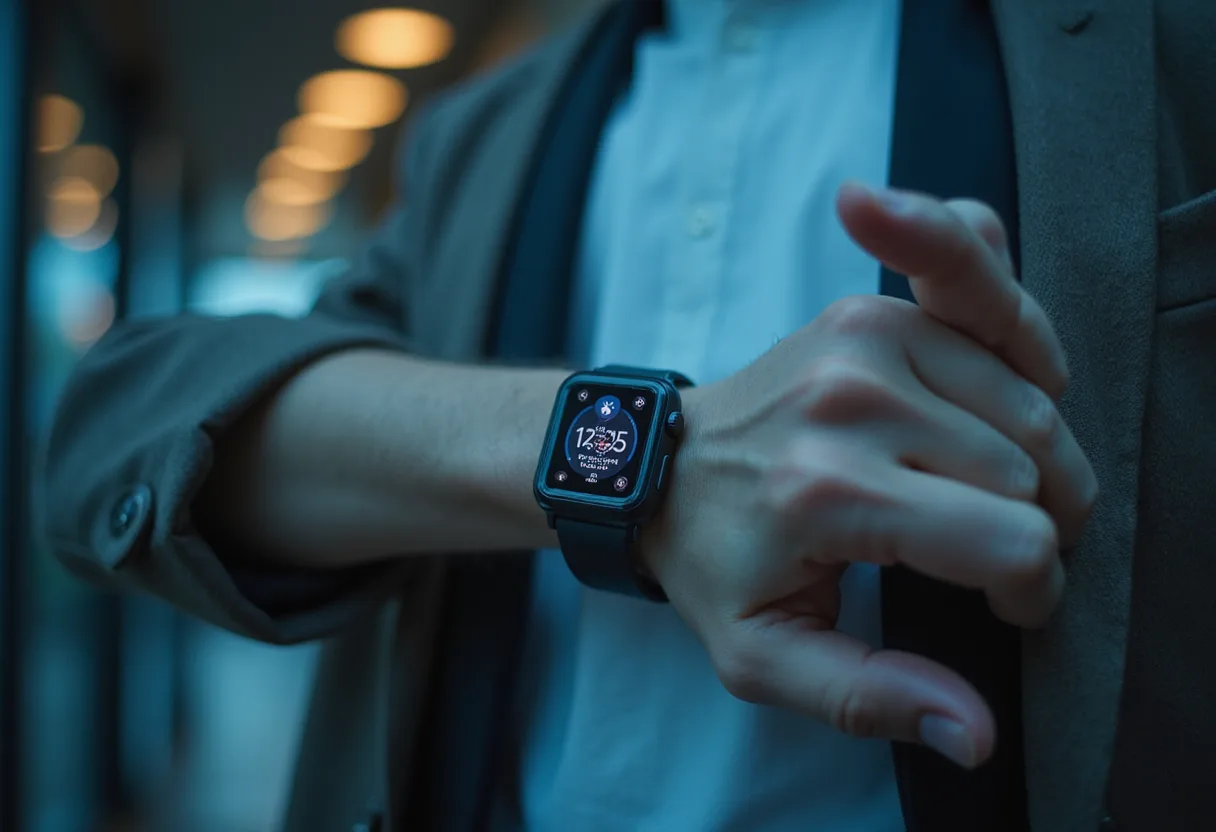
A smartwatch application detected seizures while producing a low rate of false alarms, according to a summary published by Brain & Life, the patient magazine of the American Academy of Neurology.
The report centers on a wearable app that runs continuously on a consumer smartwatch and issues alerts when its motion sensors register patterns consistent with seizure activity. The headline finding is the device's false-alarm performance: in the coverage highlighted by Brain & Life, the system generated few spurious alerts — the practical metric that has historically limited adoption of wearable seizure detectors in daily life.
That metric matters. For patients with epilepsy and their caregivers, a detector that cries wolf at night erodes trust quickly. Frequent false alarms lead families to disable alerts altogether, which removes the very safety net the technology is meant to provide. A low false-alarm rate therefore changes the calculus for home monitoring in a way that raw sensitivity figures alone do not.
The underlying modality here is not EEG. The app relies on the smartwatch's accelerometer-based motion sensing to identify convulsive motor events — most typically generalized tonic-clonic seizures — rather than recording cortical electrical activity directly. Readers of scalp EEG and long-term monitoring work should note the distinction: a wearable motion detector does not capture electrographic seizures, focal aware seizures, or non-motor events. Its domain is the motor signature of a seizure as expressed at the wrist.
That limitation frames how the technology fits alongside established neurophysiology practice. Inpatient video-EEG monitoring remains the reference standard for seizure classification, focus localization, and confirmation of event semiology. A wrist-worn detector occupies a different niche: longitudinal, unsupervised home surveillance of convulsive events, where it can log frequency, time-of-day distribution, and nocturnal occurrence — data that patients routinely underreport in clinic and that clinicians can use to adjust treatment between visits.
The Brain & Life summary, written for a patient audience, did not specify the study cohort size, the reference standard against which detections were adjudicated, or the exact sensitivity and false-alarm counts. Readers evaluating the claim for clinical use should look for the primary peer-reviewed publication before drawing conclusions about performance in their own patient populations. Publication details were not included in the source material.
Regulatory status was likewise not stated in the summary. Several wrist-worn seizure-detection systems have previously received FDA clearance for generalized tonic-clonic seizure detection in specific age groups, but the Brain & Life report does not identify whether the app in question holds such clearance or remains investigational. That distinction determines whether clinicians can prescribe the tool today or should regard it as a research output pending review.
For epilepsy monitoring units and outpatient neurology practices, the practical takeaway is a monitoring question rather than a diagnostic one. Where video-EEG answers "what kind of seizure is this?", a validated wearable with an acceptably low false-alarm rate addresses "how many seizures is this patient actually having at home?" — a question diaries answer poorly. Clinicians may increasingly find ambulatory wearable data presented alongside routine and long-term EEG findings, and reading rooms should be prepared to reconcile the two when event counts disagree.
The Brain & Life report signals where the field is heading: wearable detectors good enough that families keep them switched on. Whether the app described here meets that bar in prospective, real-world use will depend on the underlying trial data, which the summary invites but does not detail.
Based on
Source: Google News: Epilepsy monitoring.
Priya Raman
Show full bio
Market editor covering regulation, policy and their impact on Clinical neurophysiology and EEG interpretation at EEG Signal.