Apple Watch App Detects Nearly All Tonic-Clonic Seizures, Study Reports
A Neurology Today report finds an Apple Watch app detects virtually all tonic-clonic seizures with few false alarms, offering adjunctive wearable surveillance for epilepsy's highest-risk seizure type.
Updated
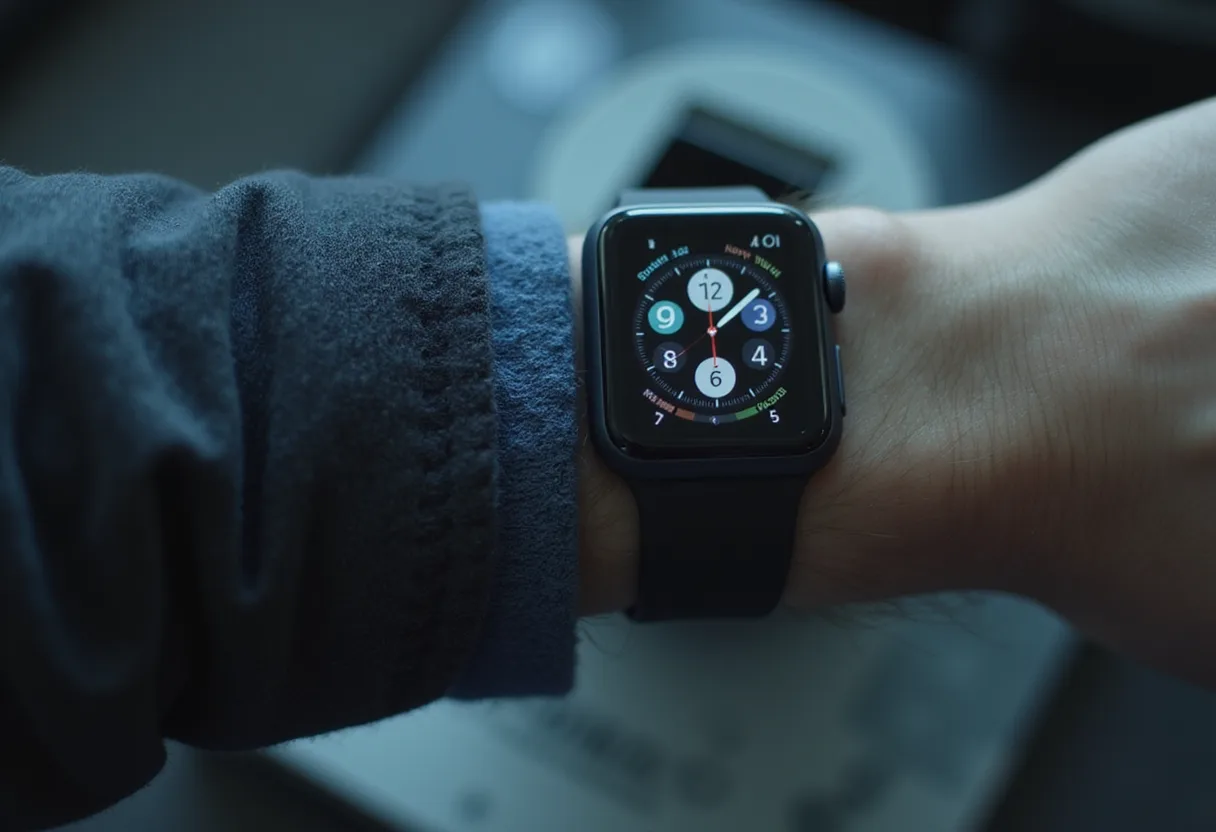
A wearable seizure-detection application running on the Apple Watch detected virtually all tonic-clonic seizures while producing few false alarms, according to a report in Neurology Today. For clinical neurophysiologists and epilepsy monitoring unit (EMU) staff, the finding adds to a growing body of evidence that wrist-worn accelerometer-based detectors can supplement — though not replace — conventional seizure surveillance in ambulatory and inpatient settings.
The application relies on the Apple Watch's built-in motion sensors rather than on EEG. It detects the repetitive, rhythmic motor signature of tonic-clonic seizures through accelerometry and alerts caregivers. That modality distinction matters for readers of scalp EEG and intracranial records: a wrist-worn motion detector is a behavioral surrogate, not a neurophysiological measurement. It will not capture electrographic seizures without a motor phenotype — focal aware seizures, focal impaired-awareness seizures without major bilateral motor involvement, absence seizures, or subclinical ictal patterns on EEG remain invisible to it.
What the reported results do support is strong performance within the device's intended detection window: generalized tonic-clonic events, where motor activity is precisely what carries the diagnostic signal. The headline claim — near-complete sensitivity with few false alarms — addresses the two failure modes that have historically limited wearable detectors in real-world use. Missed tonic-clonic seizures expose patients to risks including injury, status epilepticus, and sudden unexpected death in epilepsy (SUDEP), which occurs most often after generalized tonic-clonic events, often unwitnessed at night. False alarms, at the other extreme, drive caregiver fatigue and device abandonment.
Early generations of wrist and bed movement sensors struggled on both fronts. Studies of accelerometer-based wrist devices published over the past decade reported sensitivities for tonic-clonic seizures that ranged widely, often between roughly 60 and 95 percent, with false-alarm rates that could reach several per night in some home-use cohorts. Achieving near-perfect detection with a low false-alarm burden in a consumer device that patients already wear for other reasons would mark a practical step forward, particularly for nocturnal supervision, where the alternative is often a bed alarm, a seizure-alert dog, or nothing at all.
Clinicians should place the finding in its proper regulatory and evidentiary context. The Apple Watch ecosystem includes seizure-detection applications that have pursued FDA clearance as digital therapeutic or monitoring tools, and readers should check the current clearance status of any specific app before recommending it for clinical decision-making. A published detection study, however strong, is not the same as a cleared indication. The Neurology Today report concerns study performance, and the practical questions that follow — how the algorithm performs across patient ages, in patients with comorbid movement disorders such as tremor or myoclonus, and during activities like exercise that generate repetitive motion — are the questions reading-room and EMG colleagues will hear at the bedside.
For the epilepsy monitoring unit, the immediate relevance is triage and documentation rather than diagnosis. Continuous scalp video-EEG with full montage remains the reference standard for seizure classification in the EMU. A wearable detector cannot lateralize, localize, or characterize ictal onset patterns; it cannot distinguish a primary generalized tonic-clonic seizure from a focal-to-bilateral tonic-clonic seizure, a distinction that carries direct surgical implications. What it can do is extend observation beyond the EMU stay — into the patient's home, workplace, and sleep — and generate event counts that are notoriously unreliable when based on self-report. Patients with focal epilepsy underreport seizures substantially, and seizure diaries are known to miscount events, particularly nocturnal ones. An objective, timestamped motor-event log gives clinicians a denominator they have never reliably had.
That timestamped record also has research applications. Investigators running antiseizure medication trials have increasingly turned to wearable-derived event counts as an outcome measure, and a detector with near-complete sensitivity for tonic-clonic seizures and low false-alarm rates would strengthen those endpoints considerably.
Counseling implications follow. Patients and families who ask about the Apple Watch for seizure detection should hear a calibrated answer: the reported performance applies to tonic-clonic seizures, the most dangerous but not the most common seizure type; the device does not detect non-motor seizures; and it should function as an adjunct to, not a substitute for, established safety planning. The device also does not provide the electrographic correlation that a neurophysiologist would want before changing management based on reported event frequency.
The report does not settle the question of whether wearable detection reduces SUDEP incidence or serious injury; demonstrating detection sensitivity is not the same as demonstrating outcome benefit, and randomized outcome data in this field remain limited. It also does not address how the system performs at scale, across the heterogeneous real-world wear patterns — loose straps, off-wrist charging, shared devices — that degrade deployed performance relative to protocolized studies.
Within its demonstrated scope, though, the result is straightforward: a consumer wrist device detected almost all tonic-clonic seizures with few false alarms in the reported study. As validation cohorts expand and long-term home-use data accumulate, the realistic near-term role for this technology is continuous adjunctive surveillance for the highest-risk seizure type, integrated into clinical workflows alongside — never instead of — electroencephalographic assessment.
Based on
Source: Google News: Epilepsy monitoring.
Priya Raman
Show full bio
Market editor covering regulation, policy and their impact on Clinical neurophysiology and EEG interpretation at EEG Signal.