SpecialtyCare IONM Training Program Earns CAAHEP Accreditation
SpecialtyCare's intraoperative neuromonitoring training program has earned CAAHEP accreditation, a marker of externally reviewed quality for the IONM technologist pipeline.
Updated
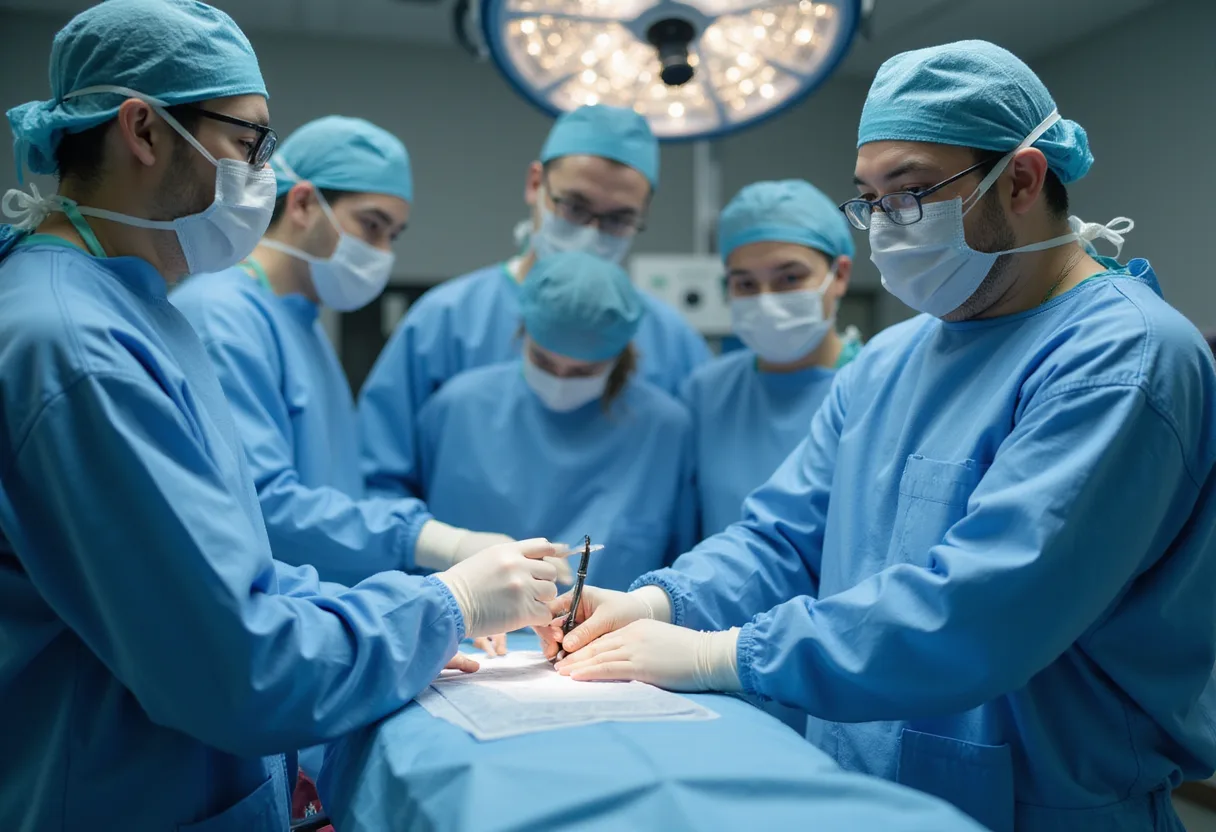
SpecialtyCare announced that its intraoperative neuromonitoring (IONM) training program has earned accreditation from the Commission on Accreditation of Allied Health Education Programs (CAAHEP), a step the company frames as external validation of quality in health professions education.
For neurophysiology professionals, the accreditation matters most for what it signals about workforce development. Intraoperative neuromonitoring depends on skilled technologists who record and interpret somatosensory evoked potentials (SSEPs), transcranial electrical motor evoked potentials (MEPs), spontaneous and triggered electromyography (EMG), and, in some settings, electroencephalography (EEG) and auditory brainstem responses (ABRs) during spine, cranial, vascular, and peripheral nerve surgery. Those competencies have historically been built through uneven pathways: on-the-job training, short certificate courses, or discipline-specific certification such as ABRET and CNIM credentials. A CAAHEP-accredited program introduces a standardized, externally reviewed curriculum for producing that workforce.
CAAHEP accreditation requires programs to meet standards set through a collaborative review process with a relevant committee on accreditation, covering curriculum content, faculty qualifications, resources, and documented student outcomes. Programs must undergo periodic review to maintain status. In allied health fields ranging from diagnostic medical sonography to surgical technology, CAAHEP accreditation has functioned as a de facto floor for employer confidence and, in many cases, a prerequisite for graduates sitting for board certification examinations. SpecialtyCare's announcement positions its IONM training track within that framework.
For monitoring teams in the operating room, the practical implications are concrete. Accredited training programs typically publish completion and placement outcomes, giving hiring managers in neurophysiology services and hospital IONM programs a clearer basis for evaluating new technologists. Surgeons and neurologists who rely on intraoperative data — median nerve and posterior tibial nerve SSEPs, train-of-four testing, pedicle screw stimulation thresholds — can reasonably expect graduates of an accredited program to arrive with a documented, competency-based exposure to those techniques rather than a variable apprenticeship.
The accreditation also lands amid a sustained staffing squeeze in neurophysiology. Demand for IONM coverage has grown alongside the volume of complex spine and cranial procedures, while the pipeline of credentialed technologists has not kept pace. Training capacity, not surgical demand, is often the limiting factor in expanding monitoring coverage. A large clinical services organization investing in an accredited educational pathway signals an attempt to scale that pipeline internally, with quality controls that outside reviewers have vetted.
SpecialtyCare describes the accreditation as demonstrating quality in health professions education. The company operates clinical services including IONM across a network of hospitals and surgical facilities, making its training program both an internal staffing engine and, potentially, a contributor to the broader technologist labor market.
For reading neurologists, clinical managers, and IONM directors, the development raises a straightforward question: whether CAAHEP accreditation becomes an expected hiring criterion for monitoring staff, as it has in other allied health disciplines. If other providers follow, accredited IONM training could shift from differentiator to baseline expectation across the field.
Based on
Elena Vasquez
Show full bio
News editor covering people, launches and day-to-day practice in Clinical neurophysiology and EEG interpretation at EEG Signal.