UCSF and Foothill College Launch Neurodiagnostic Technologist Training Partnership
UCSF and Foothill College have partnered to train neurodiagnostic technologists, pairing hospital clinical placements with classroom training to staff EEG labs and epilepsy monitoring units.
Updated
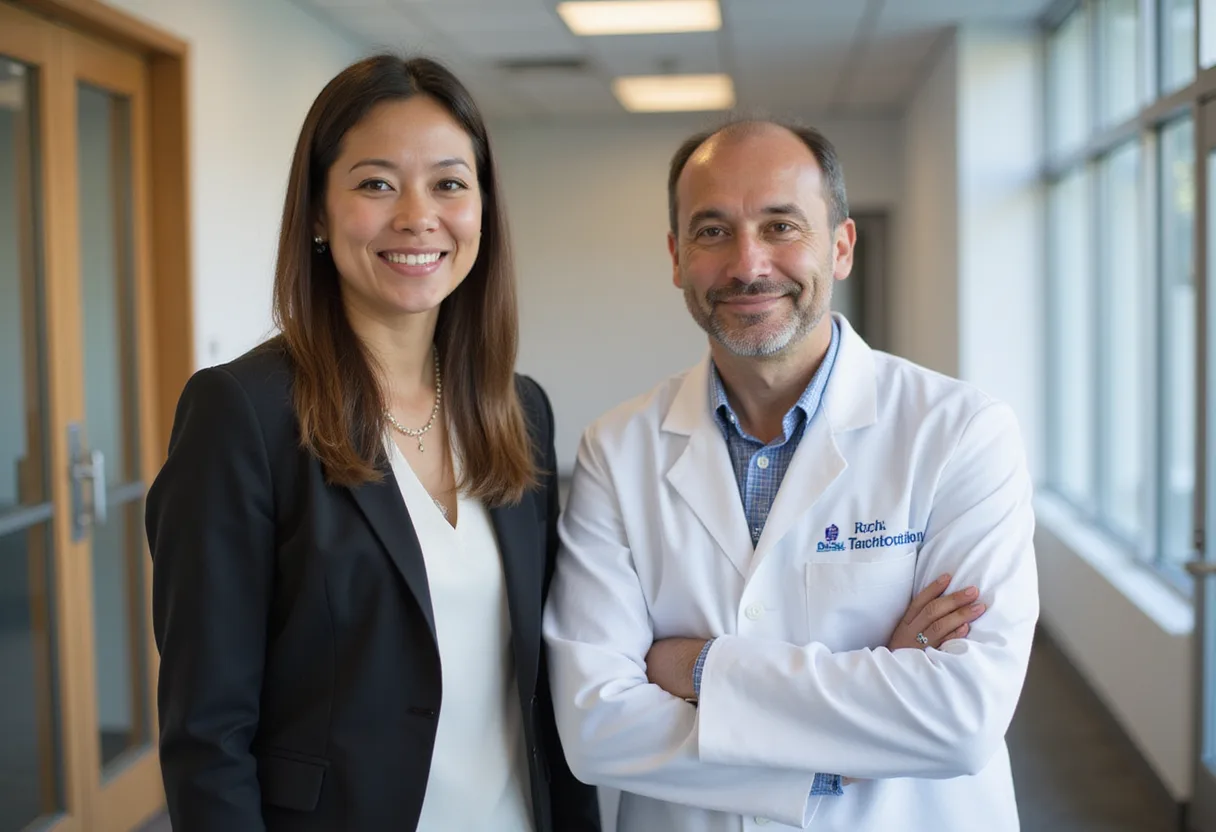
UCSF has partnered with Foothill College to train neurodiagnostic technologists, a move aimed at addressing a shortage of the specialized staff who record scalp EEG, evoked potentials, and other neurophysiology studies in epilepsy monitoring units and reading rooms.
Neurodiagnostic technologists — the professionals who apply electrodes, run montages, and capture the routine and long-term EEG studies that neurologists interpret — are in short supply nationally, and academic medical centers have struggled to fill positions in EEG labs and epilepsy monitoring units. The UCSF–Foothill partnership pairs a major academic neurology department with a community college curriculum, creating a pathway for students to train on clinical-grade equipment and move directly into hospital neurodiagnostic roles.
For clinical neurophysiology labs, the pipeline problem is practical. Long-term video-EEG monitoring in epilepsy units requires technologists competent in electrode application per the 10–20 system, impedance troubleshooting, seizure and pattern recognition at the bedside, and patient safety during invasive monitoring. Training programs that combine classroom instruction with hospital-based clinical exposure, as this partnership does, target exactly those competencies.
The program places Foothill College students in UCSF clinical settings, where they gain supervised hands-on experience with the neurophysiology studies performed in an academic medical center — experience that community college programs alone rarely provide. Graduates enter a field where registered technologist credentials (such as R. EEG T. through ABRET) remain the standard for hiring in epilepsy monitoring units and neurodiagnostic departments.
The collaboration also reflects a broader staffing reality: as demand for EEG monitoring grows — in epilepsy care, ICU continuous EEG monitoring, and intraoperative monitoring — the number of accredited training programs has not kept pace. Hospital systems increasingly partner with local colleges to grow their own workforce rather than compete for a limited pool of credentialed technologists.
For reading rooms and monitoring units, the downstream effect of such programs is measurable: shorter wait times for EEG studies, better-quality recordings from properly trained staff, and more reliable long-term monitoring data for interpreting neurologists.
The partnership signals how academic neurology departments may increasingly take a direct role in technologist education — a trend worth watching for any lab manager currently posting unfilled EEG positions.
Based on
Source: Google News: Neurodiagnostic.
Olivia Hart
Show full bio
Correspondent covering people, launches and day-to-day practice in Clinical neurophysiology and EEG interpretation at EEG Signal.