Zeto One Point-of-Care EEG Delivers Scalp Recording in 5-10 Minutes Without Technologists
Allina Health deploys Zeto One, a pre-gelled, full-montage headset EEG with AI seizure-burden alerts, enabling 5-10 minute application at hospitals without EEG technologists.
Updated
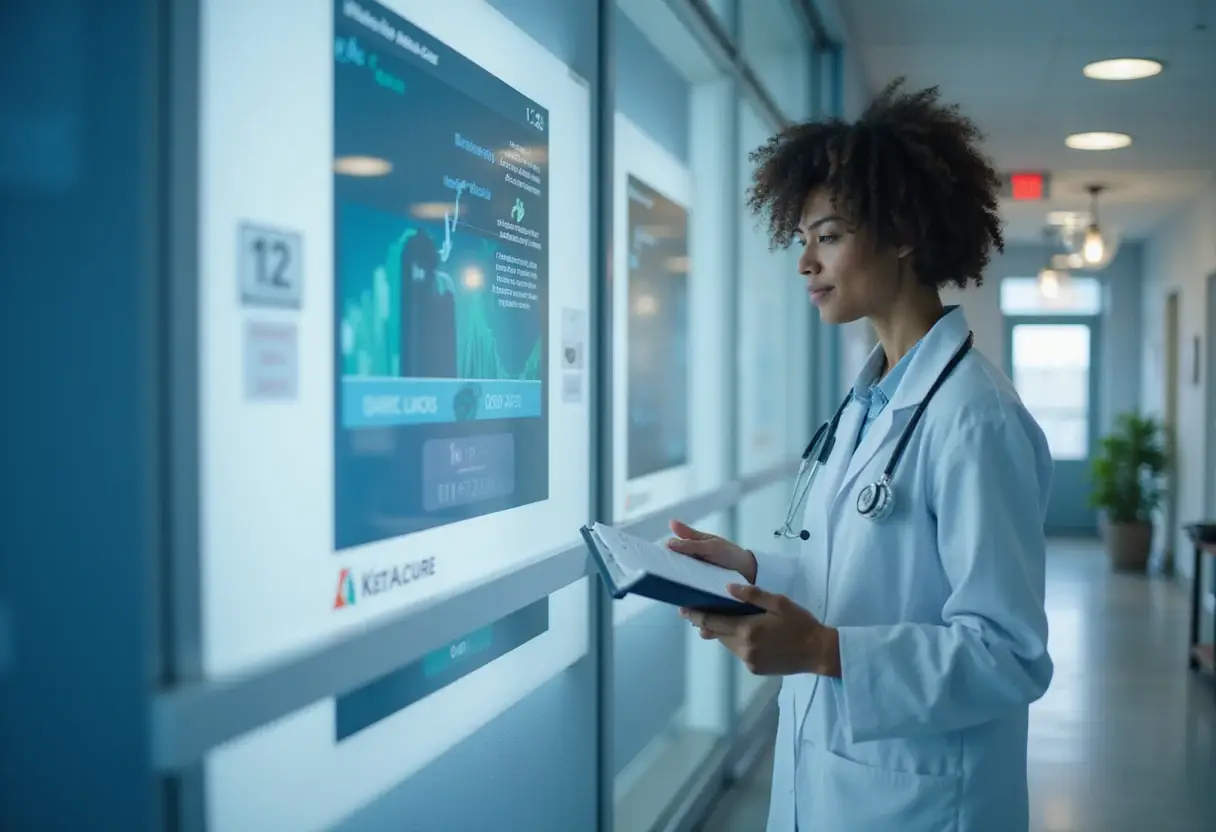
A scalp EEG can now be running on an unresponsive patient within 5 to 10 minutes at hospitals that employ no EEG technologists at all. That is the core promise of the Zeto One point-of-care EEG system, now in clinical use at Allina Health's United Hospital – Hastings Regina Campus in Minnesota, where neurologists say it is shifting how community hospitals evaluate suspected status epilepticus.
Armin Jewell, DO, a neurologist and epilepsy fellowship-trained physician at Allina Health Brain and Spine Institute, described the device and its implementation in a recent interview with NeurologyLive*. His account outlines both what the technology does and where its evidence base currently stands.
What makes the Zeto One headset different?
The device is a standalone, wearable EEG platform that trained nursing staff — not technologists — can apply at the bedside. Several design features reduce setup friction:
- Pre-gelled electrodes containing conductive gel, eliminating manual gel application
- Magnetic electrode attachment to the headset
- Built-in electrode labels positioned within the headset
- A full electrode array, not a limited-lead configuration
- Integrated video monitoring displayed alongside the EEG tracing on a bedside monitor
That full montage plus video capability, Jewell noted, distinguishes Zeto One from other point-of-care EEG systems. "It helps bring it much closer to a traditional EEG setup compared with some of the more limited systems," he said.
How does the workflow function in practice?
Once a physician places a standard point-of-care EEG order, a nurse or other trained staff member applies the headset in the emergency department, ICU, or on an inpatient floor. The device then uploads EEG data to the cloud, where epileptologists review the tracing remotely and return interpretation.
"It's really a way to bring EEG capability directly to the patient without requiring transfer to another location that has traditional EEG resources," Jewell said. He framed the workflow as essentially identical to conventional EEG ordering and interpretation, only faster to deploy — and with tangible benefits in avoided transfers, cost savings, and patients staying closer to home.
Where is the evidence strongest?
Jewell was direct about the evidence hierarchy. The strongest data for point-of-care EEG systems concern ruling out status epilepticus — for instance, in a patient who remains unresponsive after a seizure or other CNS injury, when clinicians must decide whether ongoing electrographic seizures are being missed. Historically, that situation forced a choice between transfer, waiting for EEG access, or empirical treatment.
Because Zeto One carries a full electrode array and video, Allina clinicians have begun extending its use beyond that core indication. Expanding applications include:
- Post–cardiac arrest evaluation
- Fluctuating encephalopathy and unexplained altered mental status
- Longer monitoring sessions where video review adds diagnostic value
Jewell cautioned that these broader indications reflect evolving practice rather than established evidence; ruling out status epilepticus remains the use case supported by the strongest data.
What role does the embedded AI play?
The system analyzes the EEG in real time and estimates seizure burden, flagging high-likelihood seizure events to bedside staff so they can respond quickly or contact the interpreting neurologist. Jewell described the algorithms as deliberately tuned for sensitivity: the systems are "intentionally designed to over-alert rather than miss seizures."
That design choice has consequences for the reading room. Artifact and false positives mean the AI cannot operate autonomously. "Even if the algorithm flags status epilepticus, we still need to review the tracing and make the final interpretation because sometimes what looks like seizure activity is artifact," Jewell said. "The AI is a tool that complements the neurologist rather than replacing them."
What have early implementation months shown?
Utilization at the Hastings Regina campus has increased over the past few months as staff grew comfortable with application, signal optimization, video use, and workflow integration. Jewell reported good recording quality so far and acknowledged a learning curve typical of any new technology.
The deployment also addresses a structural problem: the nationwide shortage of EEG technologists. For hospitals without dedicated EEG staff, a headset-based system offers at least a partial workaround and expands access to neurologic evaluation in settings where conventional scalp EEG was never readily available.
As clinician familiarity grows and workflows streamline, Jewell expects utilization to continue rising, with the device's role broadening gradually beyond status epilepticus exclusion into wider inpatient EEG applications.
Based on
Original: neurologylive.com.
Marcus Bennett
Show full bio
Staff writer covering technology and product news in Clinical neurophysiology and EEG interpretation at EEG Signal.