Caffeine Cuts Deep-Sleep EEG Power in 32-Study Pooled Analysis
A pooled analysis of 32 sleep-EEG studies finds that caffeine weakens deep-sleep brain waves even when sleep duration appears normal. The scalp EEG catches what the morning alarm does not.
Updated
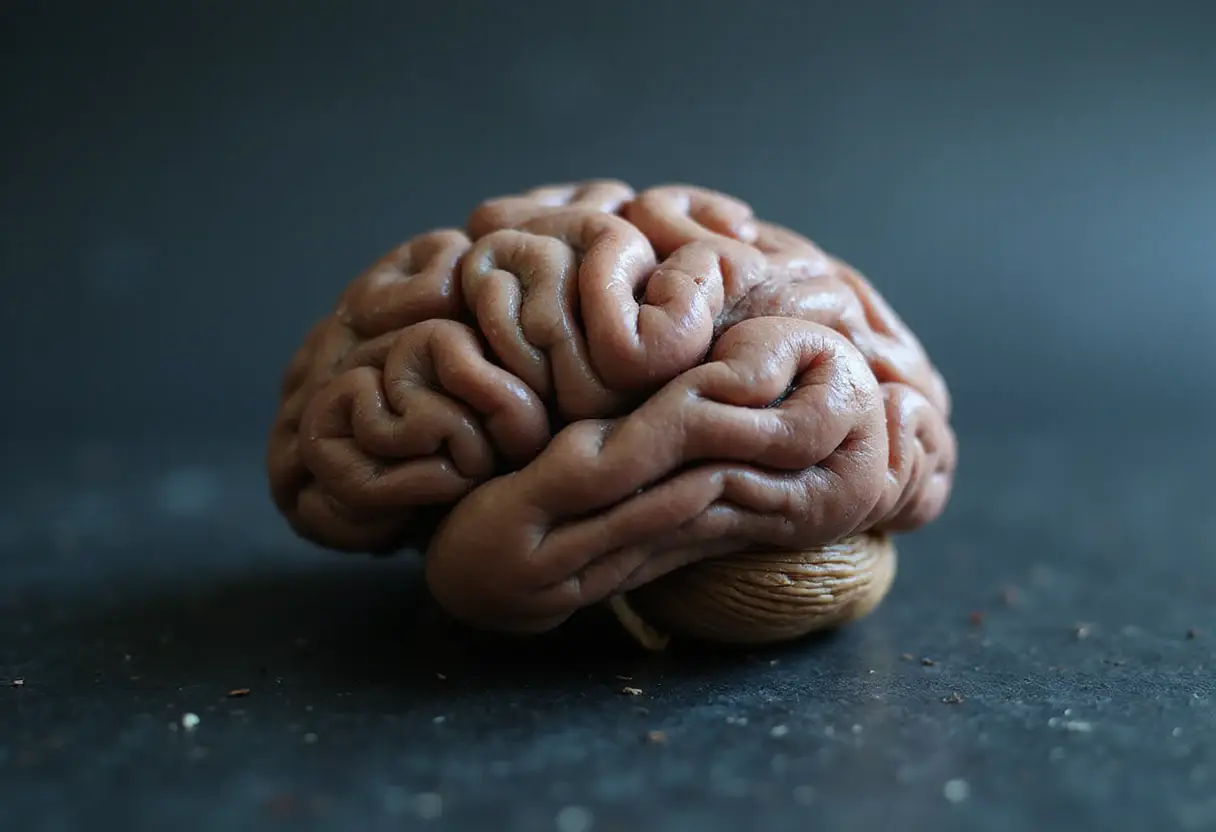
Thirty-two polysomnography studies converge on a single point: caffeine reduces the amplitude of deep-sleep brain waves on EEG, even when the sleeper logs a normal number of hours.
The pooled analysis, as reported by Medical Daily, aggregated EEG-derived slow-wave activity — the high-amplitude delta oscillations that define non-rapid eye movement stage N3 — across laboratories using standard scalp EEG montages. Slow-wave activity falls after caffeine intake in a pattern the report describes as consistent across study designs. Crucially, the effect persists even when total sleep time, sleep efficiency, and sleep latency appear unchanged.
That dissociation carries clinical weight. Slow-wave activity is the electrophysiological marker most closely tied to sleep's putative restorative functions: glymphatic clearance, memory consolidation, and the overnight reduction in cortical arousal threshold. A reduction in slow-wave amplitude on the scalp EEG does not announce itself to the sleeper as a shorter night. The morning feels ordinary. The polysomnography does not.
What does this change for the sleep laboratory?
The reading-room answer splits in two. First, EEG-based sleep staging will detect caffeine's footprint where behavioural questionnaires and wrist-worn actigraphy cannot, because the deficit sits in waveform morphology and spectral power rather than in clock time. Second, any trial or clinical protocol that uses total sleep time as its primary endpoint is, on this evidence, measuring the wrong variable. Duration has passed; spectral content is the residue that matters.
And for the monitoring unit?
Ward EEG is rarely scored for slow-wave activity outside dedicated sleep protocols, but the same principle applies. An overnight recording taken from a patient who has consumed caffeine within the preceding half-life window may underestimate the depth of physiological sleep, even when the hypnogram looks unremarkable. Caffeine clearance runs roughly five to six hours for a typical adult dose, but the EEG signature of stage N3 takes longer to normalise than plasma kinetics alone would predict.
The mechanism — adenosine A2A receptor antagonism in the basal forebrain and cortex — is textbook. The meta-analysis, as summarised, does not test it. The deeper point is methodological rather than pharmacological. EEG catches what the subjective sleep report misses, and a thirty-two-study convergence is not lightly dismissed.
The reader who treats the nightly espresso as harmless because the alarm still goes off at seven may find the pooled data uncomfortable. The verdict sentence is short. Caffeine reduces the quality of the EEG signal of sleep, not merely its quantity, and the reduction aggregates robustly across three dozen datasets.
What remains unanswered in the headline summary is whether the effect size scales with habitual intake, with acute withdrawal, or with the ADORA2A genotype that modulates individual caffeine sensitivity. The next generation of sleep-EEG work, one suspects, will have to disaggregate those variables before the kitchen-table conversation gets any simpler. For now, the pooled signal carries the message: thirty-two studies, one direction, and the EEG does not lie.
Based on
Source: Google News: EEG.
Elena Vasquez
Show full bio
News editor covering people, launches and day-to-day practice in Clinical neurophysiology and EEG interpretation at EEG Signal.