Intraoperative & Critical Care
FDA Clears Ceribell's QEEG Trending and Amplitude-Integrated EEG Tools
FDA has granted Ceribell 510(k) clearance for quantitative EEG trending and amplitude-integrated EEG analysis on its point-of-care scalp EEG platform.
Updated
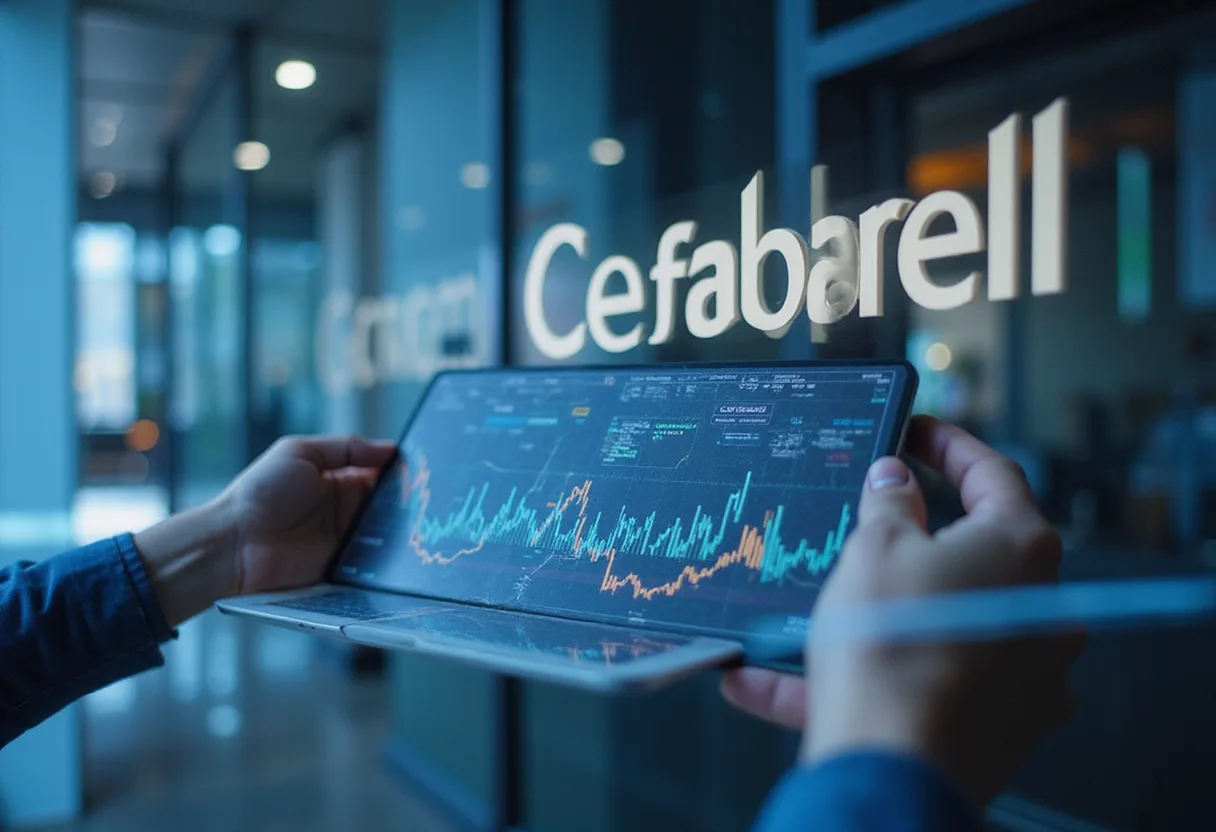
Ceribell has received FDA 510(k) clearance for quantitative EEG trending and amplitude-integrated EEG (aEEG) analysis, adding compressed, trend-based review capabilities to its point-of-care EEG platform.
The clearance covers two distinct display and analysis functions. Quantitative EEG trending compresses hours of continuous scalp EEG recording into graphical trends that show how spectral and amplitude features evolve over time. Amplitude-integrated EEG condenses raw waveform data into a simplified band trace, a display convention long familiar from neonatal neurophysiology units. Both formats let a reviewer scan long recordings quickly instead of page through continuous raw EEG at conventional paper speeds.
That workflow distinction matters for the reading room. Conventional continuous EEG review at 30 mm/s requires a trained electroencephalographer to inspect large volumes of data, which limits how quickly bedside teams can act on findings. Trend displays do not replace raw EEG interpretation; they triage it. A reviewer flags the time windows where the trend deviates from baseline, then returns to the corresponding raw scalp EEG segments to confirm or reject the suspicion. This is the same review logic long established in ICU monitoring with other quantitative platforms, now extended to Ceribell's hardware.
The 510(k) pathway itself carries information for clinical readers. A 510(k) clearance means FDA found the new quantitative trending and aEEG functions substantially equivalent to legally marketed predicate devices — it is not a novel-device De Novo or PMA approval, and it is not a clearance for a new diagnostic claim. Ceribell's platform operates as a rapid-deployment scalp EEG system intended for use at the point of care rather than in a dedicated EEG lab, and the newly cleared software functions sit within that intended use.
For monitoring-unit practice, the practical question is where compressed trending changes decisions. Quantitative trend review has its strongest track record in scenarios where delayed detection is costly and expert readers are scarce: seizure burden tracking in critically ill patients, identification of suspicious patterns for expedited raw-EEG confirmation, and long-duration monitoring where exhaustive page-by-page review is impractical. aEEG's pedigree is similar — compressed amplitude traces built their reputation in neonatal seizure and background assessment, where clinicians needed a bedside-readable summary of prolonged recordings.
The clearance also fits a broader shift in how neurophysiology data reaches treating teams. Point-of-care EEG systems push acquisition toward the bedside, away from technician-scheduled setups in the EEG lab, and quantitative displays push interpretation support toward clinicians who may not be fellowship-trained electroencephalographers. The formal diagnostic read still belongs to qualified readers, but the triage layer — deciding which hour of a 24-hour recording deserves expert eyes first — increasingly runs on software of exactly the type Ceribell just cleared.
Clinical teams evaluating the platform should keep the regulatory boundary in view: FDA-cleared quantitative trending and aEEG analysis, on an FDA-cleared point-of-care scalp EEG system. Any suggestion that the trends alone diagnose specific encephalopathies or substitute for expert interpretation goes beyond what this clearance establishes.
How quickly monitoring units adopt the compressed-review workflow — and whether trend-based triage measurably shortens time to seizure detection at the bedside — will now be tested in routine clinical use rather than in regulatory files.
Based on
Source: Google News: EEG.
Tom Whitfield
Show full bio
Senior reporter covering people, launches and day-to-day practice in Clinical neurophysiology and EEG interpretation at EEG Signal.