NAOX Builds Scalp EEG Electrodes Into Consumer Wireless Earbuds
NAOX has shown wireless earbuds with built-in EEG electrodes pitched as everyday brain-health monitoring — consumer hardware, not an FDA-cleared clinical device, and validation data remains outstanding.
Updated
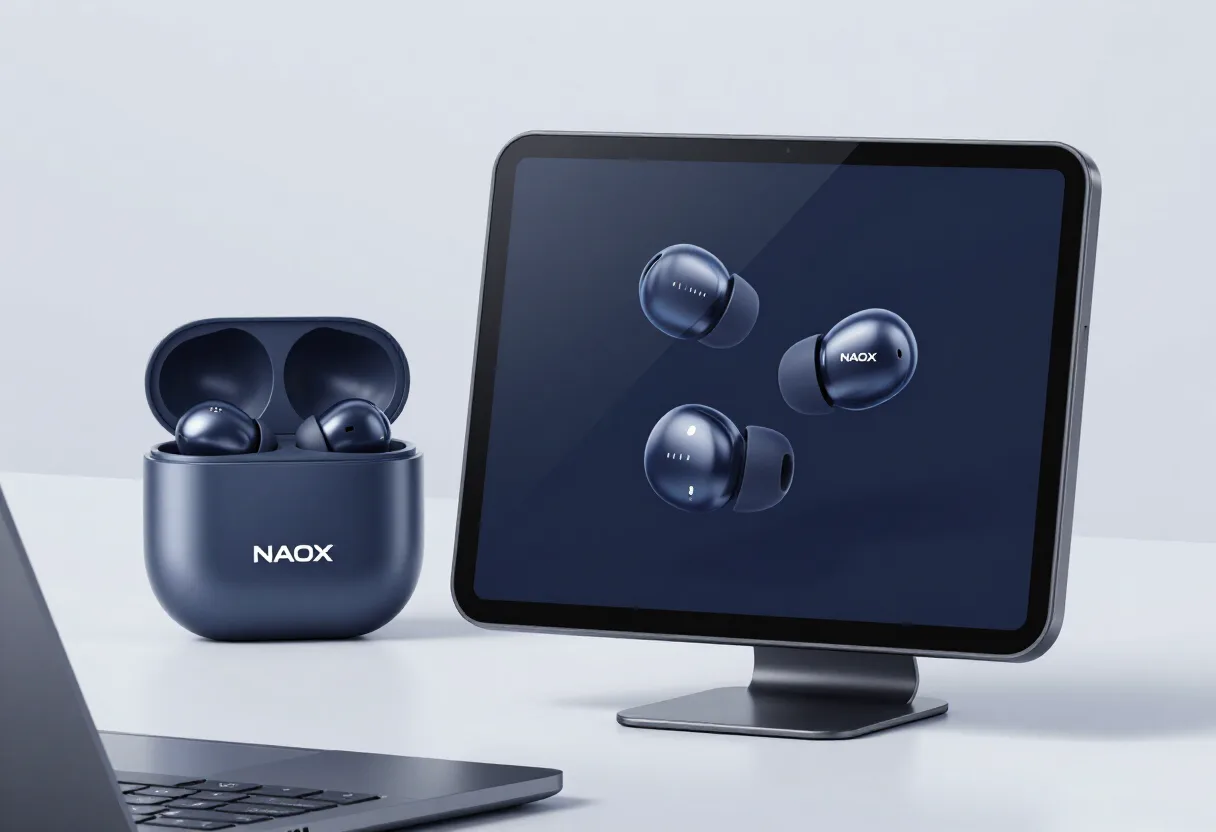
NAOX, a consumer hardware startup, has unveiled wireless earbuds with a built-in EEG system the company says will let users monitor their brain health throughout the day. Engadget reported the device following its public debut, and the claim alone — ambulatory, ear-mounted electroencephalography sold as an audio accessory — marks an unusual convergence of consumer wearables and clinical neurophysiology.
The core idea is straightforward. Earbuds already sit in contact with the ear canal and surrounding structures for hours at a time. NAOX has placed EEG-sensing electrodes into that form factor, so the same device that streams music also records electrical activity from the scalp-adjacent region of the ear. The company frames this as continuous "brain health" monitoring rather than diagnostic testing, positioning the product for wellness-oriented consumers rather than epilepsy units.
That framing matters for anyone in a reading room or monitoring unit. Standard scalp EEG relies on a full 10–20 system montage — typically 19 or more electrodes distributed across the scalp — to localize activity and capture interictal discharges. A pair of in-ear electrodes samples a fraction of that spatial coverage. What an earbud montage can reliably detect remains an open question, and the reporting available so far does not include validation data, channel counts, sampling rates, or peer-reviewed sensitivity and specificity figures for the device.
There is also a regulatory distinction to keep in mind. NAOX presented the earbuds as a consumer brain-health product. Engadget's coverage does not state that the device has FDA clearance for any clinical indication — seizure detection, sleep staging, or otherwise. Without that clearance, claims about what the EEG data can tell users should be treated as wellness marketing, not clinical neurophysiology. Devices in this category that have pursued medical indications, such as ear-EEG systems studied for overnight sleep recording, have generally required dedicated validation cohorts and blinded scoring against polysomnography before regulators accepted them.
For neurophysiologists, the more interesting signal is demographic rather than electrical. Consumer companies keep pushing EEG into smaller, longer-wearing form factors — headbands, earbuds, patches. Each generation increases the volume of ambulatory brain recordings generated outside the clinic. If patients start arriving at epilepsy centers with weeks of in-ear data collected by a consumer device, reading rooms will face questions the field has already confronted with consumer sleep trackers and single-lead ECG wearables: what artifacts dominate the recording, what can a two-channel ear montage actually capture, and who is responsible for interpreting it.
The technical challenges are familiar to anyone who has fought impedance in a long-term monitoring setup. Ear-canal electrodes move with jaw motion, talking, and swallowing. Muscle artifact from temporalis and masseter sits directly in the earbud's pickup zone. Sweat, earwax, and fit variability all affect contact quality over an all-day wear cycle. Consumer audio drivers operating inside the same shell add electromagnetic noise that scalp EEG labs work hard to exclude from their acquisition environments.
NAOX's pitch also leans on the vaguer term "brain health" — a phrase that in consumer marketing can cover stress tracking, sleep metrics, focus scoring, or fatigue alerts. The company has not, based on the available reporting, claimed seizure detection or any neurological diagnostic capability. Neurofeedback-adjacent claims, if they follow, would need to be held to what the earbud EEG demonstrably records through its specific in-ear montage.
Still, the form factor has precedent in the research literature. Groups in Denmark and elsewhere have published on ear-EEG as a minimally obtrusive alternative for overnight sleep monitoring and long-term recordings, and a validated ear-EEG system has been studied for its potential to reduce seizure-related harm through home monitoring. The engineering is credible; the open question is whether a music-focused consumer product can achieve recording quality that clinical researchers have spent years optimizing.
Engadget's report does not specify pricing, channel specifications, or an exact ship date for the NAOX earbuds, so clinicians evaluating the device for curious patients will need to wait for hands-on technical details, and ideally for published validation studies comparing the earbud recordings against conventional scalp EEG.
Based on
Source: Google News: Wearable EEG.
Tom Whitfield
Show full bio
Senior reporter covering people, launches and day-to-day practice in Clinical neurophysiology and EEG interpretation at EEG Signal.