Penn State Health Doubles Epilepsy Monitoring Unit Capacity
Penn State Health is doubling its Epilepsy Monitoring Unit capacity, expanding access to inpatient video-EEG monitoring and shortening diagnostic wait times for central Pennsylvania patients.
Updated
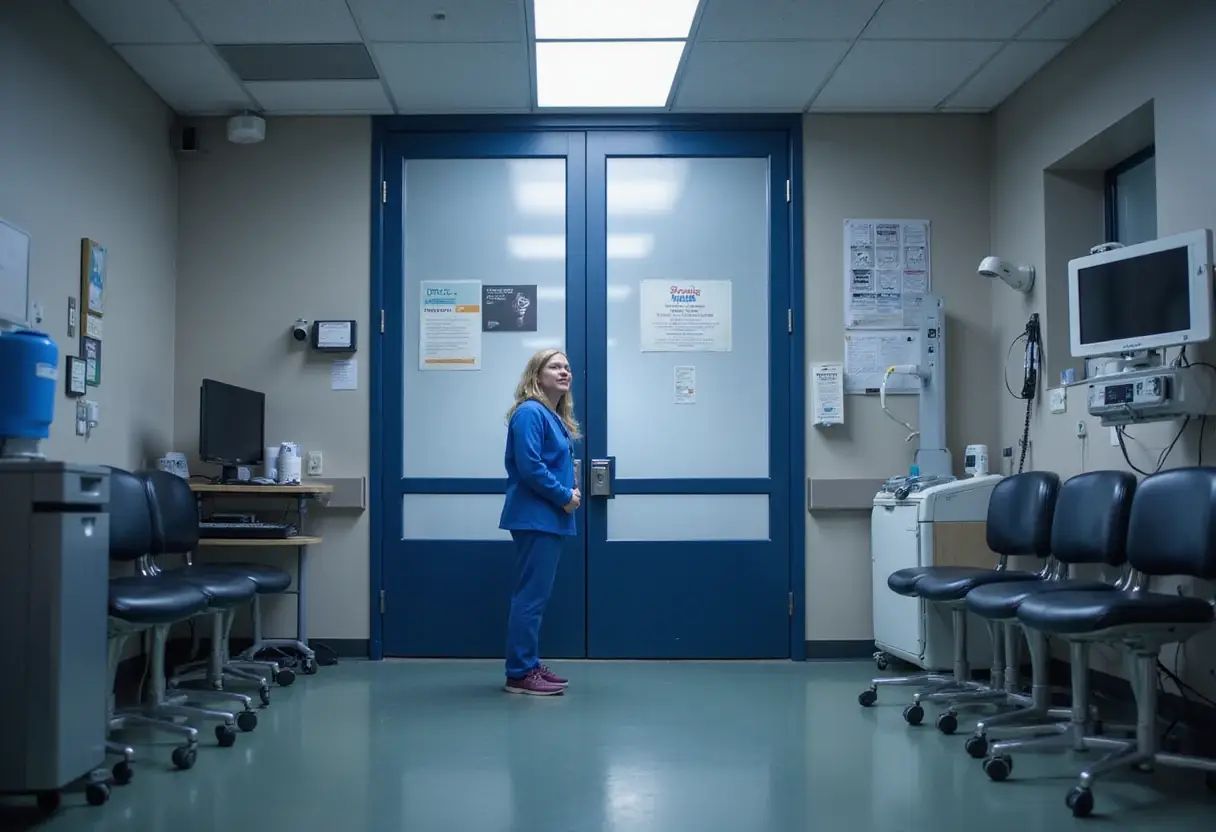
Penn State Health is doubling the capacity of its Epilepsy Monitoring Unit, a move that will expand access to long-term inpatient video-EEG monitoring for patients with suspected or refractory epilepsy across central Pennsylvania.
The announcement, reported by WGAL, centers on the epilepsy monitoring unit (EMU), the inpatient service where patients undergo continuous scalp EEG with synchronized video recording — often with medication tapering — to capture ictal recordings needed to characterize seizure type, localize seizure onset, and determine candidacy for epilepsy surgery or medical management changes.
For the region's referring neurologists, the expansion addresses a familiar bottleneck: EMU beds are a scarce resource, and wait times for inpatient monitoring frequently delay the diagnostic workup of patients whose events remain unclassified after routine outpatient EEG. Doubling bed capacity at Penn State Health means more patients can complete the phase-one evaluation — prolonged scalp-video EEG with ictal capture — closer to home rather than being referred to higher-volume centers in Pittsburgh or Philadelphia.
What does the expansion change for clinicians?
An EMU admission remains the reference standard for differentiating epileptic seizures from psychogenic nonepileptic events and other mimics, and for localizing the epileptogenic zone before any consideration of intracranial monitoring. More monitoring beds translate into:
- Shorter wait times for elective video-EEG admissions
- Faster ictal EEG capture for patients with pharmacoresistant seizures
- Earlier identification of surgical candidates among refractory cases
- Reduced transfer of complex cases out of the region
Each monitored bed requires round-the-clock EEG technologist support, continuous video review, and immediate nursing response during seizures — staffing and infrastructure commitments that typically accompany a capacity announcement of this kind.
Why EMU capacity matters
Epilepsy monitoring is resource-intensive by design. Patients may stay several days while antiseizure medications are tapered to provoke habitual events, with technologists maintaining electrode integrity and electroencephalographers reviewing continuous recordings daily. Institutional capacity therefore directly constrains how quickly new-onset and refractory cases move through the diagnostic pipeline.
A doubling of beds at a major academic center in the Penn State system signals institutional investment in the full epilepsy care pathway — from scalp-video EEG through, where indicated, intracranial evaluation and surgical treatment.
Patients and referring physicians seeking admission criteria or referral pathways can contact Penn State Health's neurology service for details on the expanded unit.
Based on
Source: Google News: Epilepsy monitoring.
Olivia Hart
Show full bio
Correspondent covering people, launches and day-to-day practice in Clinical neurophysiology and EEG interpretation at EEG Signal.