WILD animal platform links neural recording and field behavior
The 4.7-gram WILD platform combines 64-channel neuronal recording, three behavioral sensors and optogenetic stimulation for freely moving small animals in naturalistic settings.
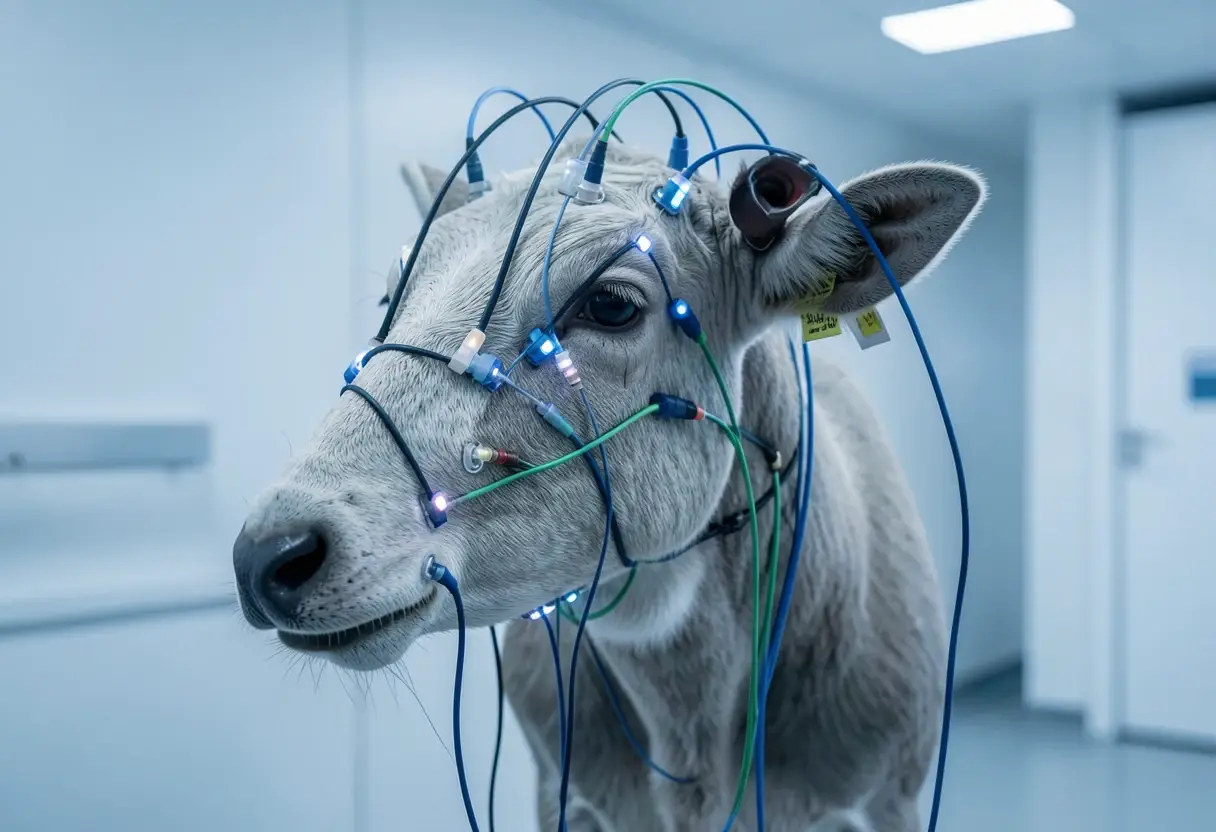
The WILD platform combines 64-channel neuronal recording, a head-mounted camera, a microphone, a motion tracker and optogenetic stimulation in a 4.7-gram system for freely moving small animals. A 2.5-gram battery would support about three hours of continuous neuronal recording at 20-kilohertz sampling.
Described in a Nature Methods paper published last month, WILD—Wireless, Interactive, Lightweight Datalogger—targets the tether, a persistent methodological ornament in animal neuroscience.
Conventional systems for recording and manipulating neuronal activity in freely moving animals usually use tethers, which interfere with natural movement, especially during social encounters involving several animals. Wireless alternatives exist, but they are often heavy and can affect behavior, while their battery lives remain limited.
“Our dream was to bring neuroscientific studies closer to the natural behaviors animals express in the wild,” said study investigator Antonio Fernandez-Ruiz, associate professor of neurobiology and behavior at Cornell University.
“What makes this impressive is the level of integration into a platform that can do multimodal recording, onboard processing and neuronal manipulation in a package that supports freely moving animals,” said Daniel Aharoni, associate professor-in-residence of neurology at the University of California, Los Angeles, who was not involved in the work.
Aharoni added: “Bringing these capabilities together makes experiments in complex environments and social settings much more practical.”
The engineering bargain
Zifang Zhao, a research associate in Fernandez-Ruiz's laboratory, led the engineering. The assembled platform weighs 4.7 grams, including a 1.65-gram battery and casing.
- Recording and manipulation: Recording electrodes capture neuronal activity, while a dedicated module provides optogenetic stimulation.
- Behavior: A head-mounted camera, microphone and motion-tracking unit place movement, visual activity and sound alongside the neural record.
- Storage and processing: Onboard signal processing and a microSD card keep data on the device rather than transmitting neuronal data over the radio link.
- Control and synchronization: The platform includes a microcontroller unit; Bluetooth carries control and synchronization signals.
- Power and configuration: The reported 64-channel, 20-kilohertz setting would run for about three hours with a 2.5-gram battery. Zhao said investigators can disable components or reduce the sampling rate for longer operation, allowing the platform to fit different experiments.
What does this change for animal laboratories?
Until now, researchers generally recorded brain activity while animals performed laboratory tasks, or observed behavior over longer periods in nature. WILD permits both at once: neural recording and behavioral observation in the same freely moving animal.
Azahara Oliva, assistant professor of neurobiology and behavior at Cornell and a study investigator, described the aim as opening research at the intersection of neuroscience and ecology. The system can correlate behavior with changes in light, temperature or the presence of predators. Fernandez-Ruiz identified possible studies of how seasons affect the brain and the long-term effects of psychedelic drugs.
For a laboratory team, the immediate gain is procedural. Researchers can remove the tether, retain video, sound and motion records in the same session, and alter sampling or disable components according to battery demands. In social experiments, the setup may better preserve the movement and interactions that cables can disturb. It also permits optogenetic manipulation during naturalistic recording rather than observation alone.
Onboard processing and local microSD storage reduce the need for a continuous neural-data transmission link. Bluetooth remains available for commands and synchronization. That division suits longer field deployments, although battery capacity still sets the practical session length.
Limits of the evidence
The report describes the modality only as neuronal activity captured by recording electrodes. It does not identify the small-animal species, electrode geometry, montage, or whether the signals are scalp, cortical-surface or intracortical. It also gives no signal-to-noise performance, stimulation parameters or decoding accuracy. Acquisition at 64 channels and 20 kilohertz specifies sampling, not biological interpretability.
The paper contains no human-subject data and makes no regulatory-clearance claim. WILD should therefore be treated as investigational animal research equipment, not as an FDA-cleared clinical EEG system, and the findings do not establish a human monitoring application.
If WILD proves reliable during long, socially demanding field sessions, one platform could support studies of seasonality, predators and longer-term psychedelic drug effects in naturalistic settings. The cable is gone; the proof now lies in the behavior and the signal.
Based on
Original: doi.org.
Elena Vasquez
Show full bio
News editor covering people, launches and day-to-day practice in Clinical neurophysiology and EEG interpretation at EEG Signal.