EMU Death Prompts Review of Safety Policies and Practice Standards
A patient death in an epilepsy monitoring unit is prompting scrutiny of EMU safety policies, supervision levels, and seizure-response practice standards, Neurology Today reports.
Updated
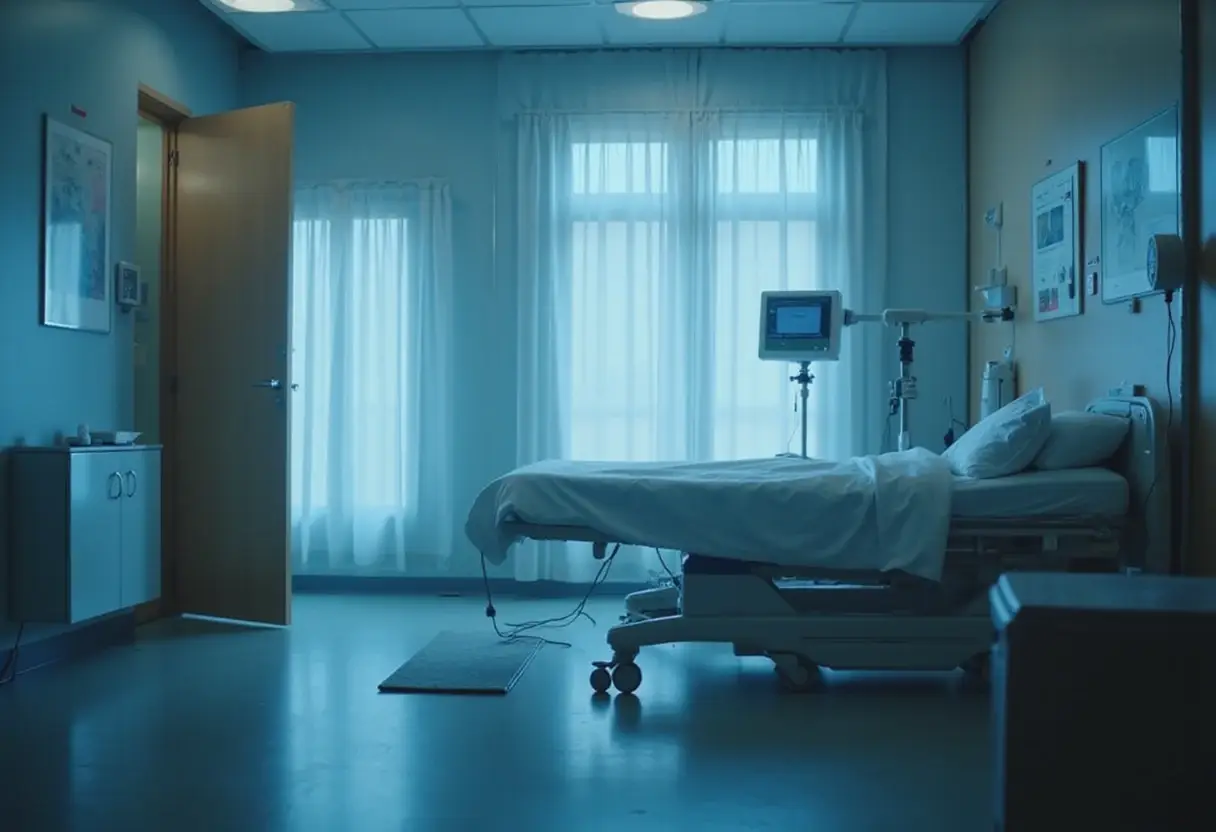
A patient death in an epilepsy monitoring unit (EMU) has triggered scrutiny of the safety policies and practice standards that govern inpatient video-scalp-EEG monitoring, Neurology Today reports.
The case lands in a setting practitioners know well. EMUs occupy a paradoxical position in hospital care: patients are admitted deliberately to have seizures, with anti-seizure medication tapered or withdrawn, while continuous scalp video-EEG captures ictal events for localization and classification. That design is diagnostically indispensable. It also concentrates risk.
What does the death put on the table?
According to Neurology Today's reporting, the fatality is prompting questions about whether current EMU safety policies — supervision levels, seizure-response protocols, and staff training — match the actual risk profile of the population being monitored.
For reading-room and monitoring-unit staff, the debate touches concrete, daily decisions:
- How quickly staff must respond when an ictal pattern appears on continuous EEG review
- Whether one-to-one observation is warranted for patients at elevated risk, including those with generalized tonic-clonic seizures or known SUDEP risk factors
- How medication withdrawal schedules should be balanced against seizure burden during an admission
- What escalation thresholds — clinical or electrographic — should trigger intervention before a seizure becomes dangerous
None of these are abstract questions. Each maps onto a protocol choice that EMU nursing staff, EEG technologists, and neurologists make on every admission.
Why EMUs carry inherent risk
The safety question in an EMU is structural, not incidental. Admissions are planned around provoking the very events clinicians otherwise work to prevent. Medication taper lowers seizure threshold. Hospital environments disrupt sleep. Supervision, even at its best, cannot be continuous at the bedside for every patient at every moment — which is precisely why policy standards, rather than individual vigilance alone, carry the safety load.
That is what makes a death consequential beyond the individual case. A single fatal outcome exposes whether the written protocol left room for failure, or whether the failure occurred inside a protocol that worked as designed. Neurology Today's report frames the incident in exactly those terms: as a question about standards, not merely about one unit's execution.
What should monitoring units do now?
For practitioners, the practical reading of the report is a prompt to audit locally. Units that have not revisited their safety policies recently — supervision ratios, seizure-response timing, SUDEP risk screening at admission, and staff training on ictal emergencies — have a concrete reason to do so now.
The clinical community has long recognized that EMU safety depends on layered defenses: continuous EEG review, video monitoring, agreed escalation pathways, and clear documentation of who responds when an event is identified. A death reported at the level of a professional publication invites every unit to ask which of those layers is thinnest on its own ward.
It also invites a harder question about standardization. Practice standards across EMUs vary in supervision intensity and response protocols. Whether this case becomes a catalyst for tighter, more uniform standards — through guideline bodies or accreditation expectations — will depend on how the specialty weighs the incident in the months ahead.
Neurology Today's report signals that the conversation has moved from incident review to standards review, and monitoring-unit teams should expect it to shape expectations for documentation, supervision, and seizure-response readiness going forward.
Based on
Source: Google News: Epilepsy monitoring.
Marcus Bennett
Show full bio
Staff writer covering technology and product news in Clinical neurophysiology and EEG interpretation at EEG Signal.