Neurable Ships $499 AI Headphones With Dry EEG Sensors
Neurable's $499 AI headphones read brain waves via dry EEG sensors, pushing consumer electrophysiology into mainstream audio hardware. Clinical validation remains unaddressed.
Updated
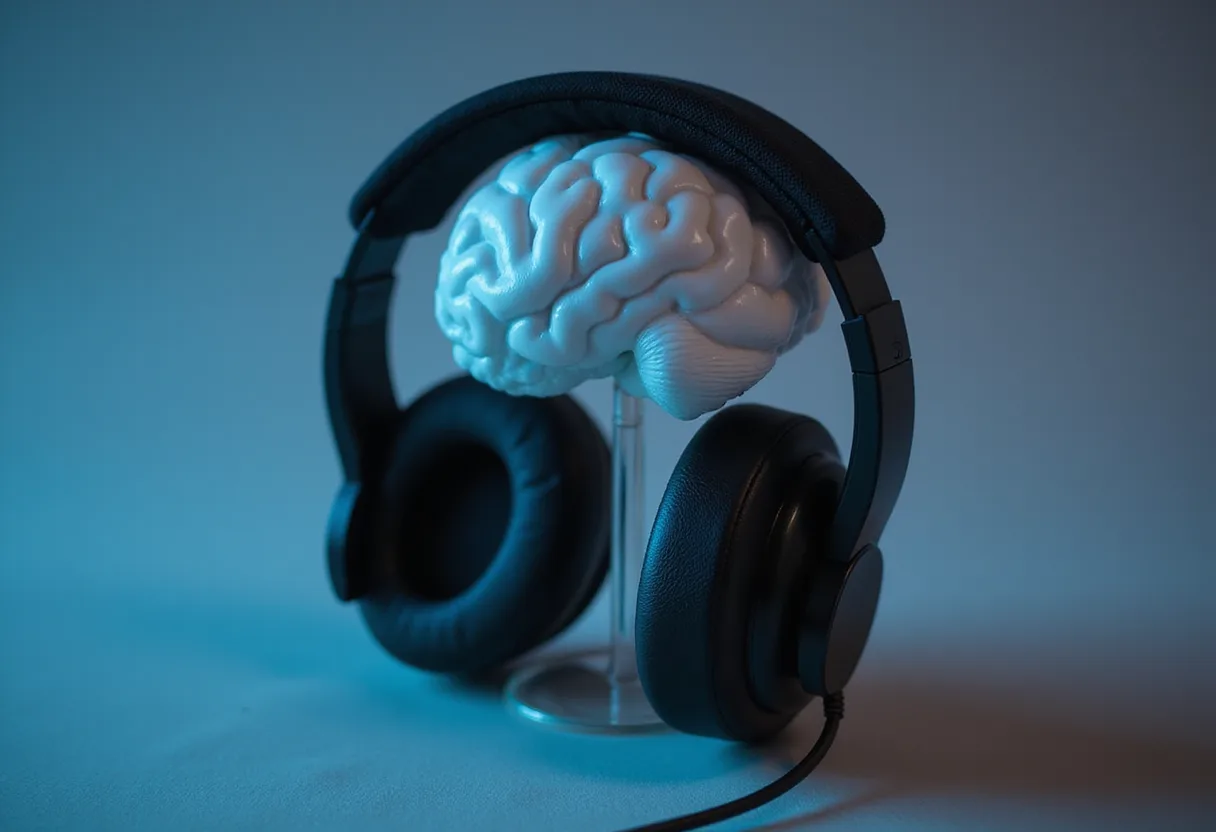
Neurable has launched a pair of AI headphones that read brain waves, priced at $499 and marketed to consumers rather than clinicians or researchers.
The device joins a growing category of consumer electroencephalography hardware — headbands and ear-mounted sensors that record cortical electrical activity through dry electrodes embedded in an everyday form factor. Neurable's product folds that sensing capability into over-ear headphones, the accessory many users already wear for hours at a time.
The launch price of $499 positions the headset well above standard premium consumer headphones and roughly in line with other brain-sensing wearables that have attempted the consumer market over the past decade. For clinical neurophysiologists, the arrival matters less as a diagnostic tool — consumer-grade dry-electrode EEG cannot replace a properly mounted scalp EEG montage in an epilepsy monitoring unit — and more as evidence that electrophysiological recording is moving into devices people purchase for music.
What the announcement establishes
The source material confirms three facts: Neurable is the manufacturer, the device is an AI-branded headphone that reads brain waves, and it costs $499. The announcement does not specify sensor count, electrode placement, sampling rate, bandwidth, or the computational pipeline behind the "AI" label. It also does not state whether the device has any regulatory clearance for medical or wellness claims, so readers should treat it as a consumer product until Neurable or the FDA says otherwise.
That distinction matters. In a reading room or monitoring unit, the relevant question for any EEG device is whether it has been cleared or approved by regulators for a stated clinical purpose. Consumer neurotechnology has historically occupied a gray zone: companies market attention tracking, meditation scoring, or sleep staging while avoiding explicit diagnostic claims that would trigger FDA oversight. Without a stated clearance, this headset belongs in that category.
Context from the consumer EEG segment
Neurable is not the first company to put EEG into a wearable. The consumer segment has seen dry-electrode headbands, in-ear sensors, and gaming-oriented headsets, most of which record from a small number of frontal sites — typically the forehead region, where hair interference is minimal and dry electrodes can maintain acceptable impedance. Multi-channel coverage comparable to the International 10-20 system has remained out of reach for consumer hardware.
What has changed is the pairing of these sensors with on-device or cloud machine learning. Companies in this space argue that consumer wearables generate long, continuous recordings — days or weeks of data rather than the 20-minute routine scalp study — and that algorithmic interpretation compensates for lower signal quality. Whether that trade-off produces clinically useful information remains an open research question, and this launch does not answer it.
Practical implications for neurophysiology readers
For clinicians, the arrival of a $499 brain-reading headphone raises two practical issues. First, patients will increasingly arrive with their own EEG recordings, generated by devices with unknown validation, and may ask physicians to interpret them. Second, longitudinal consumer EEG could eventually serve as a screening adjunct — for sleep, attention, or seizure-adjacent phenomena — but only after formal validation studies against reference-standard recordings.
For now, no such validation accompanies this launch. The device reads brain waves; the announcement does not demonstrate that it reads them with the fidelity, artifact rejection, or analytical rigor that clinical neurophysiology requires. The honest reading is that a well-funded consumer company has decided the market will pay $499 for electrophysiology in a headphone, and that decision itself signals where the field's consumer-facing frontier now sits.
Neurable has not announced clinical partnerships or validation studies alongside the launch. How the company substantiates its brain-reading claims — and whether it pursues regulatory clearance for any of them — will determine whether this device becomes a research tool or stays a curiosity in the consumer audio aisle.
Based on
Source: Google News: EEG.
Marcus Bennett
Show full bio
Staff writer covering technology and product news in Clinical neurophysiology and EEG interpretation at EEG Signal.