Paradromics Partners With Siemens Healthineers on BCI Imaging
Paradromics has partnered with Siemens Healthineers to develop scalable imaging for its investigational brain-computer interface platform, a developmental deal with no cleared product yet.
Updated
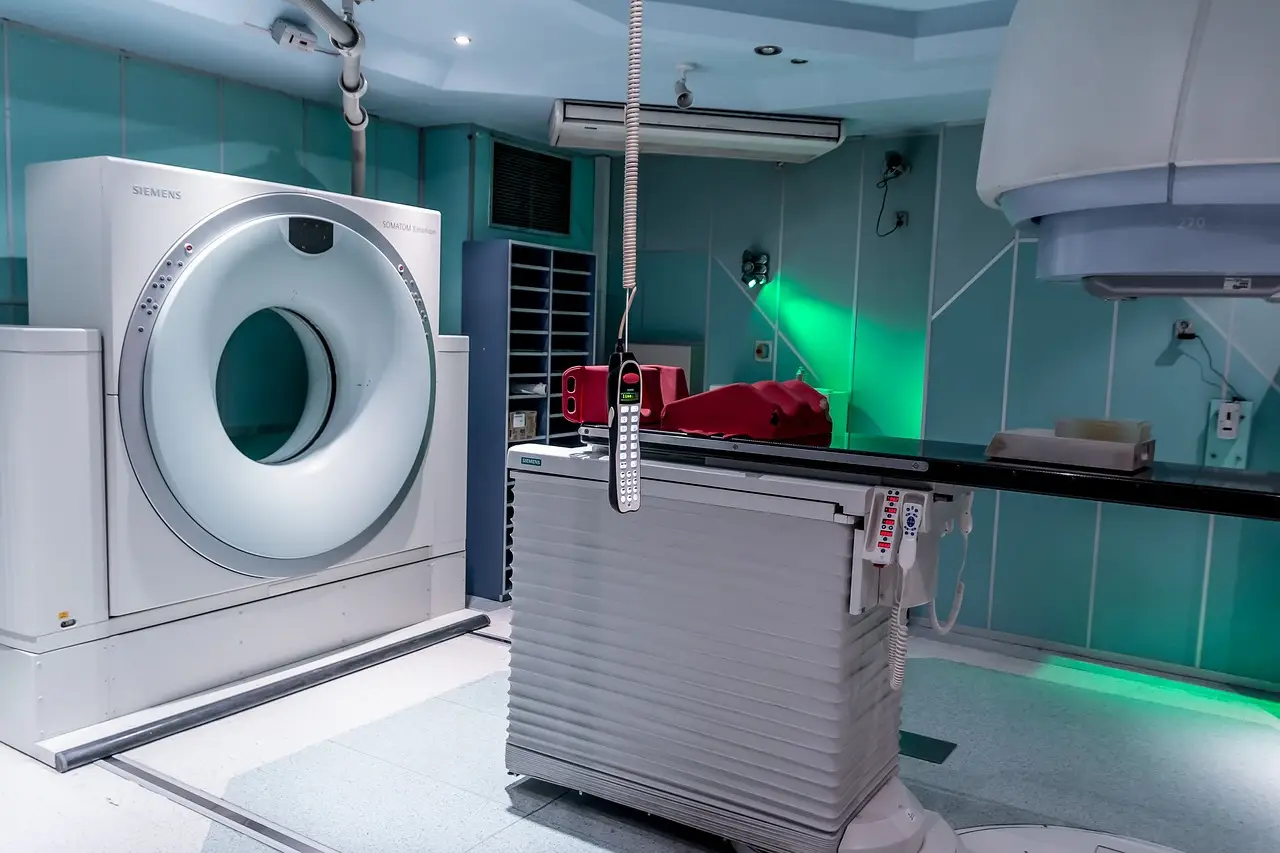
Paradromics has tapped Siemens Healthineers to support development of scalable imaging for its brain-computer interface platform, the companies announced this week. The pairing places a neurotechnology startup against the manufacturing muscle of one of the largest medical imaging companies in the world.
The deal, reported by MassDevice, is a development partnership rather than a product launch. Paradromics, based in Austin, Texas, is one of several ventures building implantable interfaces designed to record directly from cortical tissue — intracranial work, not scalp EEG, and not neurofeedback. Siemens Healthineers brings decades of experience in computed tomography, magnetic resonance imaging and the regulatory pathways that surround them.
The word doing the heavy lifting in the announcement is "scalable." Intracranial recording devices have historically been handmade in small numbers. A handful of patients. A handful of electrodes. A handful of laboratories. If BCI technology is ever to leave the operating rooms of investigational trials, someone must figure out how to make it in quantity.
What does the partnership actually cover?
The companies describe the collaboration as focused on imaging for BCI development. That means the partnership targets the visualization and mapping infrastructure around implanted devices rather than the electrode arrays themselves.
For clinical neurophysiology readers, the relevant facts are these:
- Paradromics works on implantable, high-channel-count cortical interfaces — the ECoG-plus territory, far beyond standard scalp montages.
- Siemens Healthineers contributes imaging capability, the kind that guides electrode placement and anatomical localization in intracranial work.
- The collaboration is developmental. No product has been cleared, approved or commercialized under it.
That last point deserves emphasis. Nothing in this announcement changes what a monitoring unit or reading room can order today. Paradromics' devices remain investigational. Siemens' role, for now, is that of a development partner, not a distributor.
Why a startup needs a giant
BCI companies face a problem that pure software firms never encounter: hardware that must survive inside a human skull for years, meet implant-grade manufacturing standards, and pass regulators who have seen few precedents.
Siemens Healthineers has navigated those waters many times, across modalities and continents. Paradromics has the neural interface technology. The logic of the arrangement is straightforward. One company knows how to build machines at scale; the other knows what to measure inside the brain.
Whether the combination works is a question for the coming years, not this press release.
The competitive context
Paradromics operates in a field that includes Neuralink, Blackrock Neurotech, Synchron and others, all racing to move implanted interfaces from investigational trials into clinical reality. Each has chosen a different route — different electrode technologies, different insertion methods, different regulatory strategies.
The Paradromics approach, high-channel-count cortical implants, is among the most ambitious. It is also among the most surgically demanding. Imaging support from an established partner addresses one link in that chain.
MassDevice reports the collaboration as a step toward scalable BCI imaging. Scale is the word investors and clinicians alike should watch. First-in-human demonstrations have arrived from several companies. Second patients, tenth patients, hundredth patients — those are the numbers that will matter.
A measured verdict
The announcement is a business fact, not a clinical one. No device gains clearance from it, and no epilepsy monitoring unit should adjust its protocols on its account.
But manufacturing partnerships of this kind have historically marked the moment a technology stops being a laboratory curiosity. If Paradromics and Siemens Healthineers deliver, intracranial interface work gains an industrial base it has never had. The next milestones to watch are regulatory submissions and any first-in-human data under the collaboration.
By Elena Vasquez
Based on
Elena Vasquez
Show full bio
News editor covering people, launches and day-to-day practice in Clinical neurophysiology and EEG interpretation at EEG Signal.